Balloon Sourcing Sustainability Sourcing Criteria for Malaysia Procurement
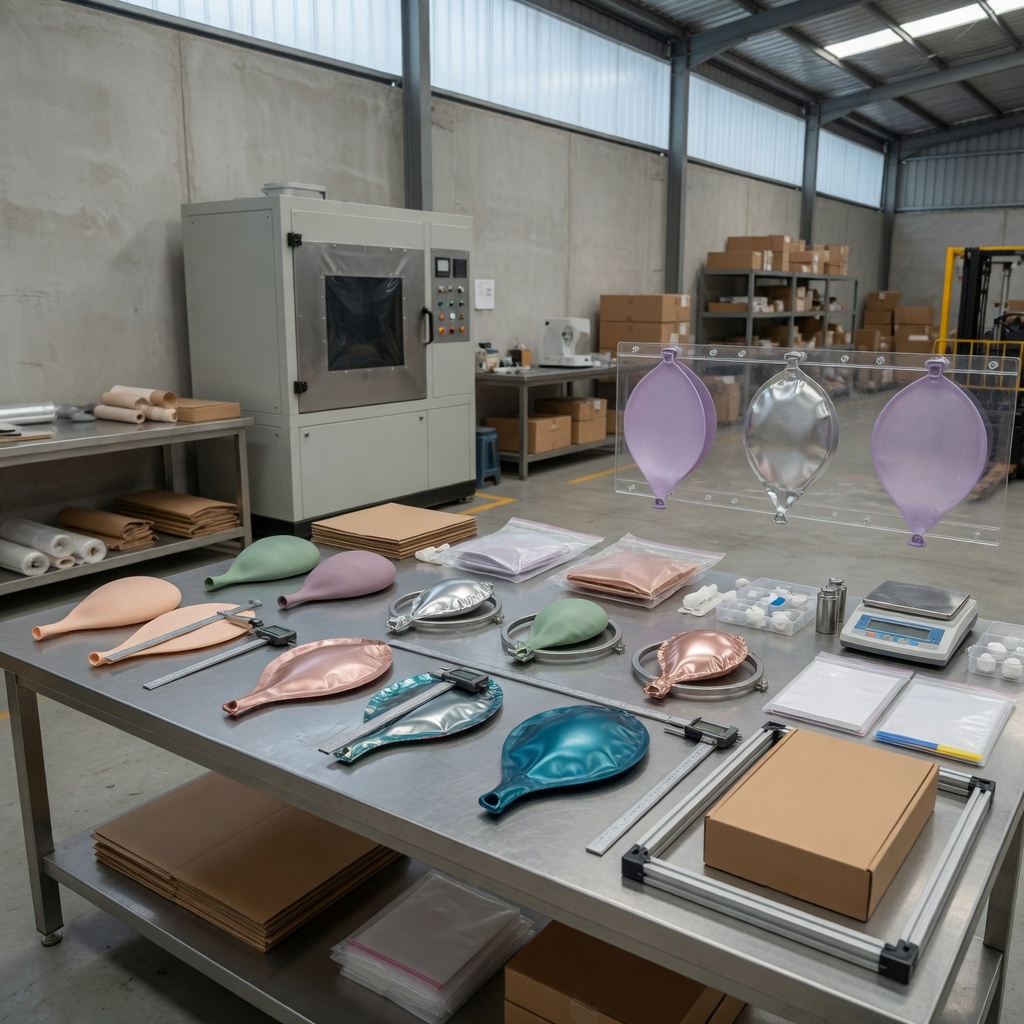
By Vincent Xi, Editorial Author
For Malaysian distributors, wholesalers, retailers, and corporate procurement teams, balloon sourcing sustainability sourcing criteria should answer one decision question: can every sustainability statement in a quotation be traced to the exact balloon SKU, producing site, document scope, approved sample, packaging specification, and shipment being purchased?
Treat each claim as a mandatory evidence gate when it affects eligibility. Mark it Pass only when the wording and supporting records reconcile. Use Clarify for missing, expired, inconsistent, or out-of-scope evidence. If an optional claim remains unsupported, remove it from the offer and score only the verified attributes. Reject the offer when a mandatory identity, evidence, performance, documentation, or change-control requirement fails.
Keep latex and foil balloon offers in separate evidence groups unless the RFQ establishes a common functional specification. Compare price, minimum order quantity, lead time, and service only after the mandatory product, claim, performance, Malaysian documentation, and change-control gates pass.
Sustainability Sourcing Criteria for Balloon Procurement in Malaysia
The criteria should connect each quoted claim to a defined procurement record rather than treating general supplier statements as product evidence.
| Decision gate | Required RFQ fields | Pass condition | Clarify or stop condition |
|---|---|---|---|
| Quoted SKU | Product code, material type, construction, declared dimensions, finish, colour, print, neck or valve configuration, accessories, pack format, and producing site | The quotation, specification, sample, declaration, report, and packaging record identify the same configuration and site | A document covers another SKU, material, component, sample, or facility |
| Claim boundary | Exact claim wording, claimed benefit, covered product or activity, included components, exclusions, conditions, and intended communication channel | The wording does not exceed the documented product, packaging, facility, or logistics boundary | Terms such as eco, responsibly sourced, or biodegradable are undefined or broader than the evidence |
| Evidence mapping | Issuer, document title, reference, issue date, validity status, sample identity, SKU relationship, site, method, result, and exclusions | Current evidence maps to the quoted configuration and proposed wording | Evidence is expired, incomplete, summary-only, or unrelated to the offer |
| Functional acceptance | Traceable sample, inflation method, inspection conditions, hold period, leakage result, neck or valve checks, seam checks where applicable, appearance criteria, and failure disposition | The production-representative sample meets the buyer's documented acceptance specification | A material or packaging change has no performance evidence tied to the approved configuration |
| Comparable measures | Accepted quantity, product mass, packaging mass by layer, carton dimensions, shipment mass, shipment volume, route, mode, and delivery point | Competing offers use the same functional, order, route, and delivery boundaries | Totals omit rejected units, packaging layers, route legs, or other material differences |
| Malaysia review pack | Commercial description, proposed tariff classification, origin, draft invoice, packing list, transport-document fields, report mapping, and certificate mapping | Product identifiers and quantities reconcile across the draft shipment documents | Classification or product identity remains unresolved before shipment |
| Change control | Notice process for changes to material, formulation, pigment, ink, coating, adhesive, valve, site, subcontractor, packaging, evidence, or route | The supplier identifies affected SKUs and obtains required reapproval before production or shipment | An affected configuration proceeds without revised evidence or approval |
Mandatory gates and scored preferences should remain separate. Product identity, claim scope, required evidence, accepted performance, Malaysian document readiness, and change control are pass-or-fail matters. Material intensity, packaging intensity, freight efficiency, supplier-level practices, price, and service can be compared only after those controls pass.
Source Boundaries for Sustainability Claims
The supplied pages have different evidentiary roles. None should be treated as universal proof for an unrelated balloon SKU.
| Supplied source and context | What the page supports | Appropriate procurement use | What it does not establish |
|---|---|---|---|
| Vincent Xi author profile | Identifies Vincent Xi as Editorial Author | Supports the visible byline, role, and author URL | Product testing, factory activity, certification, customer outcomes, or personal procurement experience |
| Gemar manufacturer commitment page | Gemar states that it offers bio-based latex and FSC-certified ranges and describes recyclable packaging, solar-powered manufacturing, GRI-related reporting, and Sedex membership as company practices | Supports attributed questions about the stated range, certificate scope, producing site, reporting period, packaging boundary, and membership status | The composition or certification status of an unrelated quoted SKU, current document validity, Malaysian compliance, biodegradation, or buyer acceptance |
| Balloon One supply-chain editorial article | Recommends environmental assessment in supplier selection, review of supplier commitments and renewable-energy practices, and logistics optimisation | Supports RFQ fields for site, reporting period, source records, route, transport mode, shipment mass, and shipment volume | Independent verification of a balloon, supplier, facility, certificate, report, or Malaysian requirement |
| Supplier shipping and documentation FAQ | Presents a customs classification and refers to SGS biodegradation reports and RoHS reports for the supplier's own foil balloon offering | Supports requests for the complete report, proposed classification, sample mapping, method, scope, date, and supplier rationale | A Malaysian tariff determination, universal RoHS applicability, SGS certification of unrelated products, or relevance to another SKU or supplier |
Named schemes and reports require controlled wording. Gemar's FSC statement is a manufacturer-reported range claim; the cited page alone does not prove that a quoted SKU is covered by a current certificate. Request the certificate holder, site, scope, validity, covered input or range, SKU relationship, and relevant transaction records before approving certification wording.
GRI-related reporting and Sedex membership may be reviewed as supplier-governance evidence because Gemar presents them as company practices. They do not establish balloon composition, biodegradation, functional performance, or Malaysian import compliance.
An SGS-issued report supports only the sample, method, conditions, duration, result, and scope recorded in that report. The issuer's name does not certify other products or broader claims. The supplier FAQ's RoHS reference also does not establish that RoHS documentation is required for every balloon procurement in Malaysia; applicability must be determined for the actual product, buyer requirement, and shipment.
RFQ Fields for Claim-to-Evidence Review
Require a response for every applicable field. A supplier should mark a field not applicable and give a reason rather than leaving it blank.
| RFQ section | Supplier response required | Evidence or record | Procurement purpose |
|---|---|---|---|
| Product configuration | SKU, material, flat dimensions, neck dimensions for latex products, seam width and valve position for foil products, inflated dimension under a defined method, finish, colour, print, accessories, and pack count | Signed specification and traceable sample reference | Establishes the product boundary for all claims and calculations |
| Material declaration | Material names and mass shares for the balloon body, neck, valve, coating, pigment, ink, adhesive, ribbon, stick, clip, bags, and transport carton where present | Signed bill of materials or composition declaration tied to the SKU | Identifies included and excluded components |
| Claim register | Exact wording, claim owner, covered product or activity, conditions, exclusions, evidence reference, and proposed use | Claim-to-evidence matrix | Prevents a facility or packaging statement from being applied to the whole balloon |
| Material-content claim | Covered material, mass share, measured or declared basis, method, holder, site, validity, and transaction evidence where relevant | Current scope documents and calculation sheet | Tests whether the wording matches the documented input and boundary |
| Biodegradation claim | Tested sample, relationship to the quoted SKU, method, conditions, duration, result, pass criterion, laboratory, report reference, issue date, and exclusions | Complete laboratory report, not a badge, summary, or laboratory name | Limits the claim to the sample and conditions actually reported |
| Product acceptance | Sample identity, production-material status, inspection lot, sample quantity, inflation method, hold conditions, leakage observations, neck or valve checks, seam checks, appearance result, and failure reasons | Approved sample record and inspection report | Establishes the accepted-unit denominator and verifies functional fit |
| Packaging | Material by layer, proposed claim wording, net mass by layer, pack count, carton dimensions, gross mass, and damage-protection specification | Packaging bill of materials, packing specification, and current carton data | Supports packaging and freight comparisons while retaining protection requirements |
| Facility statement | Producing site, reporting period, metric, operational boundary, production denominator, source record, and estimation method | Site-specific report or underlying record identified by period and owner | Keeps facility evidence separate from product evidence |
| Logistics | Producing site, departure point, route legs, mode, transshipment points, carton count, gross mass, shipment volume, consolidation basis, and delivery point | Packing data and supplier or forwarder route proposal | Enables like-for-like comparison on the same shipment boundary |
| Malaysia review pack | Commercial description, proposed tariff classification, rationale, origin, draft invoice, packing list, transport fields, reports, certificate documents, and review questions | Reconciled draft-document matrix | Identifies identity and scope conflicts before shipment |
| Commercial and change terms | Quote currency, unit-price basis, minimum order quantity, sample and setup charges, lead-time unit, quote validity, payment terms, named delivery term and place, notice process, and reapproval triggers | Signed quotation, purchase specification, and supplier acknowledgement | Supports award and protects the approved evidence boundary on repeat orders |
Practical RFQ Checklist for Malaysian Balloon Buyers
Use this checklist when preparing the RFQ, reviewing supplier responses, and recording the award decision.
Before Issuing the RFQ
- [ ] Create a separate RFQ line for each balloon SKU, material, construction, colour, print, finish, accessory set, pack format, and producing site.
- [ ] State the required order quantity and unit of measure, delivery point in Malaysia, requested shipment window, quote currency, and named delivery term and place.
- [ ] Attach the functional specification, including the buyer's dimensional method, inflation method, appearance criteria, leakage checks, neck or valve checks, and seam checks where applicable.
- [ ] List every proposed sustainability statement exactly as it may appear in procurement records, product listings, packaging, or buyer communications.
- [ ] Define each mandatory evidence gate and identify which preferences will be scored only after all mandatory gates pass.
- [ ] State buyer-defined tropical storage and transport conditions, including required units, exposure period, package state, stacking condition, and acceptance method. Do not present these buyer requirements as Malaysian legal thresholds.
Required Supplier Return
- [ ] Obtain a signed specification and material declaration mapped to the quoted SKU and producing site.
- [ ] Obtain a claim-to-evidence matrix showing the exact claim, covered product or activity, exclusions, document reference, issuer, date, validity, site, sample relationship, method, and result.
- [ ] Request complete reports and current certificate-scope documents where relevant; do not accept a badge, laboratory name, membership, or webpage summary as product proof.
- [ ] Request a traceable production-representative sample and a completed acceptance record using the RFQ method.
- [ ] Request product mass, packaging mass by layer, accepted-quantity basis, carton dimensions, gross shipment mass, shipment volume, route, mode, and delivery point in stated units.
- [ ] Request unit pricing, minimum order quantity, setup and sample charges, lead time with its unit, payment terms, quotation validity, and the assumptions behind each commercial field.
- [ ] Request the draft Malaysia review pack: commercial description, proposed tariff classification and rationale, origin, invoice, packing list, transport-document fields, report mapping, and certificate mapping.
- [ ] Obtain written acknowledgement of change-control requirements covering materials, formulation, pigments, inks, coatings, adhesives, valves, sites, subcontractors, packaging, evidence, and routes.
Clarification and Award Review
- [ ] Mark missing, stale, incomplete, inconsistent, or out-of-scope evidence
Clarifyand suspend scoring for the affected claim. - [ ] Remove optional sustainability wording that cannot be substantiated and confirm its removal from the quotation, packaging, and approved communications.
- [ ] Compare quantitative measures only when suppliers use the same functional specification, accepted-unit denominator, packaging boundary, route, mode, and delivery point.
- [ ] Refer unresolved tariff classification, documentation, labelling, or import questions for the actual SKU and shipment to the Malaysian importer's appointed broker or relevant authority.
- [ ] Record the approved SKU version, producing site, sample, evidence set, packaging specification, route basis, Malaysian review status, commercial terms, and reapproval triggers in the award file.
- [ ] Reject an offer when a mandatory product-identity, evidence, performance, documentation, or change-control gate fails.
Quantifying Balloon and Packaging Offers
Use quantitative comparisons only after the unit, boundary, as-of context, source record, and accepted-unit denominator are defined. Useful calculations include accepted yield, product mass per accepted balloon, packaging mass per accepted balloon, and accepted balloons per cubic metre for the same route and delivery point.
Illustrative RFQ Calculation
Every exact value below is a buyer-created example assumption, not a supplier fact. The scope is one hypothetical balloon SKU and one hypothetical Malaysia-bound order, as of that hypothetical RFQ's closing date. Verify every input in the supplier quotation, signed specification, packing record, route proposal, and inspection record before award.
| Example input | Assumed value | Source, scope, and verification requirement |
|---|---|---|
| Delivered quantity | 100,000 balloon units per hypothetical order | Buyer-created example assumption for the stated SKU and order as of the hypothetical RFQ closing date; verify in the supplier quotation and packing record |
| Accepted quantity | 98,000 balloon units per hypothetical order | Buyer-created example assumption for the same order and acceptance boundary as of the hypothetical RFQ closing date; verify in the inspection and disposition record |
| Net balloon product mass | 280 kilograms per hypothetical order | Buyer-created example assumption for the balloon product within the same order boundary as of the hypothetical RFQ closing date; verify in the signed specification and weighing record |
| Packaging mass | 40 kilograms per hypothetical order | Buyer-created example assumption covering the declared packaging layers for the same order as of the hypothetical RFQ closing date; verify in the packaging bill of materials and weighing record |
| Shipment volume | 2.40 cubic metres per hypothetical order | Buyer-created example assumption for the same route and delivery boundary as of the hypothetical RFQ closing date; verify in current carton data and the forwarder proposal |
| Calculated output | Example result | Derivation and verification requirement |
|---|---|---|
| Accepted yield | 98.0 percent of delivered balloon units | Buyer calculation using the assumed delivered and accepted quantities for the same order as of the hypothetical RFQ closing date; replace with verified order records |
| Product material intensity | 2.86 grams per accepted balloon | Buyer calculation using assumed product mass and accepted quantity for the same order as of the hypothetical RFQ closing date; replace with signed mass and inspection records |
| Packaging intensity | 0.408 gram per accepted balloon | Buyer calculation using assumed packaging mass and accepted quantity for the same order as of the hypothetical RFQ closing date; replace with layer-level packaging and inspection records |
| Freight efficiency | 40,833 accepted balloon units per cubic metre | Buyer calculation using assumed accepted quantity and shipment volume for the same route and delivery point as of the hypothetical RFQ closing date; replace with packing and forwarder records |
These calculations do not establish that the offer or supplier is sustainable. A lower mass or shipment-volume result should not override verified claim scope, functional acceptance, package protection, failure causes, Malaysian documentation review, or commercial terms.
Malaysia Documentation and Tropical-Condition Controls
The supplied evidence does not establish a universal Malaysian tariff classification, permit, product standard, report, label, temperature threshold, humidity threshold, or shelf-life requirement for every balloon SKU. No Malaysian standard is named because none is supported by the supplied sources.
| Review item | Evidence boundary | Required buyer control | Stop condition |
|---|---|---|---|
| Tariff classification | The supplier FAQ presents a classification for its own offering | Obtain the proposed classification and rationale for the actual SKU, then submit them to the Malaysian importer's appointed broker or relevant authority | The classification conflicts with the product description, material declaration, or draft shipping documents, or remains unresolved |
| Laboratory reports | The supplier FAQ refers to SGS biodegradation and RoHS reports | Obtain complete reports and reconcile the tested sample, method, date, result, exclusions, and relationship to the quoted SKU | Only a badge, summary, issuer name, or report for another configuration is available |
| Certification wording | The Gemar page refers to FSC-certified ranges | Obtain current holder, site, scope, validity, input or range mapping, and relevant transaction records for the quoted SKU | Proposed wording exceeds the current document scope or cannot be mapped to the offer |
| Shipment identity | The shipping FAQ is supplier-published and is not an official Malaysian instruction | Reconcile product code, description, material, quantity, pack count, mass, origin, producing entity, and site across the quotation, specification, reports, invoice, packing list, and transport fields | Material discrepancies remain before shipment |
| Tropical storage and transport | No threshold is established by the supplied sources | State the buyer's required temperature range in degrees Celsius, relative-humidity range in percent, exposure duration in days, package state, stacking conditions, and acceptance checks; require supplier evidence tied to the approved sample | Suitability is promised without defined conditions or traceable performance evidence |
| Malaysian legal applicability | No official Malaysian source was supplied | Record written responses from the appointed broker or relevant Malaysian authority for the actual product and shipment | An unresolved requirement could affect import, documentation, labelling, or release |
Supplier documents should not be described as Malaysian approval unless the appropriate Malaysian review supports that conclusion.
Award and Change-Control Decision
Use the following dispositions consistently.
| Status | Procurement meaning | Required action |
|---|---|---|
Pass | The claim, product boundary, current evidence, sample, site, measurements, and documents reconcile | Retain the approved evidence set and conditions in the purchase record |
Clarify | Evidence is missing, stale, partial, inconsistent, or mapped to another SKU, sample, site, component, or period | Suspend scoring for the affected claim until a reconciled response is received |
Remove claim | An optional claim cannot be substantiated | Delete the wording from the offer, packaging, and approved communications; score only supported attributes |
Reject | A mandatory claim, identity, performance, documentation, or change-control requirement fails | Exclude the offer or affected configuration from award |
After mandatory gates pass, compare evidence completeness, accepted yield, product and packaging intensity, freight efficiency for the same route scope, relevant supplier-governance records, price, minimum order quantity, lead time, payment terms, and service conditions. Give unsupported sustainability wording no score.
The approval record should identify the SKU version, material declaration, producing site, approved sample, inspection method, evidence set, packaging specification, route basis, Malaysian review status, and approval conditions. Require advance written notice of any change that could affect these records, followed by document or sample reapproval before production or shipment where required.
Copy-Ready Sustainability Evidence Clause
> For every sustainability statement associated with the quoted balloon SKU, state the exact wording, covered product or activity, included and excluded components, producing site, supporting document, issuer, issue date, validity status, sample or SKU mapping, method, result, and applicable conditions. Supply current copies of the referenced evidence. State net product mass, packaging mass by layer, delivered quantity, accepted-quantity basis, carton dimensions, gross shipment mass, shipment volume, route, transport mode, and delivery point in the requested units. Notify the buyer in writing before any material, site, process, subcontractor, packaging, report, certificate, or route change that could affect the approved claim or evidence. An affected configuration may not enter production or shipment until required reapproval is complete.
Methodology and Limitations
Methodology: The supplied pages were classified as an author profile, a manufacturer commitment page, a supply-chain editorial article, and a supplier shipping and documentation FAQ. External factual statements were retained only as attributed descriptions of what those pages state. Editorial recommendations were converted into RFQ fields and decision controls rather than treated as product proof. Quantitative outputs were derived by normalising product mass, packaging mass, and shipment volume against accepted balloon units within one defined order boundary.
Source context: The Gemar page supplies manufacturer-reported range and company-practice statements. The Balloon One article supplies editorial supplier-selection and logistics recommendations. The supplier FAQ supplies examples of one supplier's proposed classification and named report types for its own foil balloon offer. The Vincent Xi profile supports the author name, role, and profile URL.
Limitations and what to verify: The product and supplier pages are vendor-published, and the supplied package provides no current certificate, complete laboratory report, bill of materials, factory audit, facility dataset, freight quotation, approved sample, inspection result, Malaysian customs determination, official permit decision, or tropical-condition test. Composition, evidence scope, packaging, producing site, route, and documentation can differ by SKU and order. Before award, verify current documents with their issuers where appropriate, reconcile them to the quotation and approved sample, obtain Malaysia-specific advice from the appointed broker or relevant authority, test the sample against the purchase specification, and replace every example value with order-specific records.
Discuss Your Requirements
Review our manufacturing capabilities, then share your specifications for a supplier-fit review.