Balloon Wholesale Supplier Shipping Documentation Review for Canada Buyers
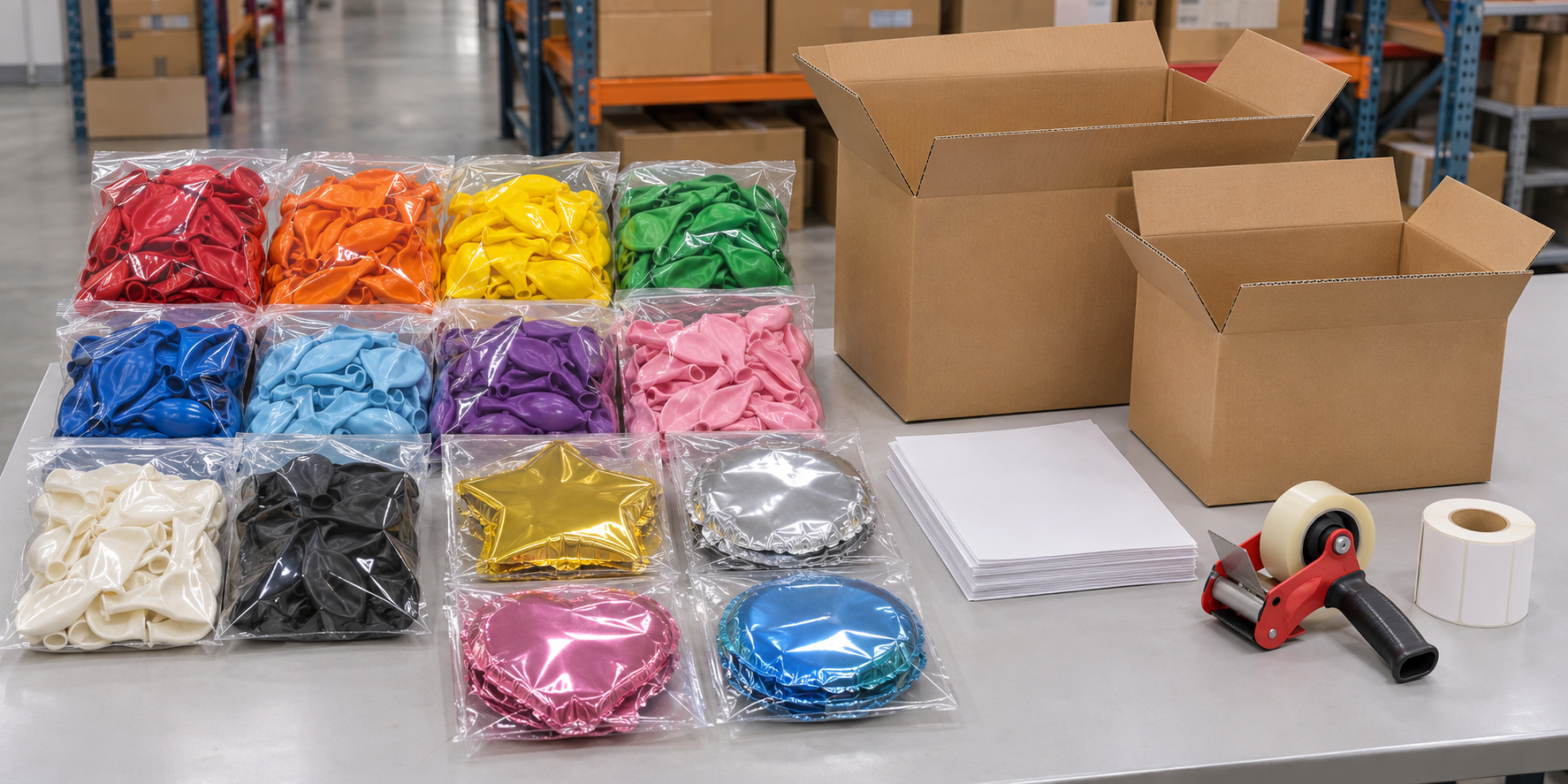
A balloon wholesale supplier shipping documentation review is the structured check a Canada buyer completes before a wholesale order is confirmed, packed, and dispatched. The purpose is simple: the documents that travel with the shipment should describe the same balloons, in the same quantities and pack formats, to the same delivery details, as the order the buyer approved. When the paperwork and the physical packing plan are aligned early, receiving, counting, and acceptance become a controlled process rather than a correction exercise after arrival.
This review does not assume any single document format. Instead, it asks the buyer to agree, in writing, which documents the supplier will provide, what fields each document must contain, how changes will be recorded, and what must be resolved before dispatch. That approach keeps the product and the purchasing decision at the centre of the page: balloon type, colour, finish, pack format, carton contents, labeling, delivery details for Canada, and the acceptance record the buyer will use on arrival.
How a Balloon Wholesale Supplier Shipping Documentation Review Works for Canada Orders
The review works best as a sequence that starts before packing and ends only when the buyer has an agreed acceptance record. Each stage produces a decision the buyer can check, rather than an assumption the buyer has to trust.
- Agree the document set. List every document the supplier will issue for the order, such as the order confirmation, the packing list, the carton list, and the dispatch notice, and note which version is the controlling version if a document is reissued.
- Align product descriptions. Compare the wording used for each balloon item across all documents so that type, colour, finish, size description, and pack format are described in the same way everywhere.
- Reconcile quantities in stages. Check the ordered quantity, the packed quantity, and the quantity shown per carton and in total, and require any difference to be explained and corrected before dispatch.
- Confirm delivery details. Check that the Canada delivery address, the named receiving contact, and the agreed delivery instructions shown on the shipping documents match the purchase order exactly.
- Record acceptance rules. Agree how the buyer will count cartons on arrival, how shortages, overages, or damaged cartons will be reported, and which document the buyer will sign or annotate to close the order.
Treating the review as a sequence matters because an error found at the packing list stage is easy to correct, while the same error found at the receiving dock creates recounts, delayed put-away, and disputes about what was actually agreed. The buyer should keep each approved version, note who approved it, and make sure later versions do not quietly change an item description, a carton split, or a delivery detail.
Balloon Wholesale Supply Documents to Align Before Ordering
In balloon wholesale supply, the most common documentation problems are not dramatic. They are small inconsistencies that compound: a colour described one way on the order and another way on the packing list, a pack format changed without a note, or cartons split differently from the plan the buyer expected to receive. The sections below describe what to align for each document, using questions and fields the buyer and supplier must agree rather than assumed facts.
The order confirmation is the baseline. Ask the supplier to restate the item list exactly as ordered, including balloon type, colour, finish, size description, pack format, and quantity per item, and to flag any item that cannot be supplied as described before packing begins. If a substitution is proposed, require it to be shown as a clear change that the buyer approves in writing, not as a silent edit to a later document.
The packing list is the receiving tool. It should let the buyer match each carton to its contents without opening every carton first. Agree the fields it will carry: carton reference, item description, quantity per carton, number of cartons per item, and total quantity per item. Require the totals on the packing list to reconcile to the order confirmation, and ask what the supplier will do if a final carton is packed differently from the rest.
The carton and labeling specification is the link between paper and physical goods. Specify where labels will be placed, what each label will show, and how mixed cartons, if any are agreed, will be identified. Because balloons are light, varied, and often packed in many colour and format combinations, clear carton identification is what allows the receiving team to sort, count, and store stock accurately. The buyer should approve a sample label layout or a written label description before bulk packing.
The dispatch notice closes the loop before the goods move. Agree when it will be sent, what it will confirm, and which document versions it will reference. A useful dispatch notice confirms that the shipment leaving the supplier matches the approved packing list, states the total number of cartons, and repeats the delivery details. If anything changed at final packing, the dispatch notice is the last controlled place to record that change for buyer approval.
Buyer Decision Table for Shipping Documentation
Use this table to turn the review into decisions. Each row is a process check the buyer defines and agrees with the supplier; it does not rely on outside benchmarks or assumed requirements. Work through the rows in order and do not release dispatch until every row has an agreed outcome.
| Review area | Buyer check | Agree before dispatch | If not agreed |
|---|---|---|---|
| Product identification | Item descriptions for balloon type, colour, finish, and pack format match across the order, packing list, and labels | One agreed naming format used on every document | Hold approval and correct the wording before packing |
| Quantity reconciliation | Ordered, packed, and documented quantities match per item and in total | A single reconciled quantity set signed off by the buyer | Require a corrected packing list and a written explanation |
| Carton contents | Each carton reference shows its contents and mixed cartons are clearly identified | Carton split and contents list approved in advance | Repack or relabel to the agreed split before dispatch |
| Labeling | Label content and placement allow receiving staff to identify cartons without opening them | Sample label or written label description approved | Approve a revised label layout before bulk labeling |
| Delivery details | Canada delivery address, receiving contact, and delivery instructions match the purchase order | Final delivery details confirmed on the dispatch notice | Correct and reissue the shipping documents before release |
| Change control | Every change to items, quantities, packing, or delivery is recorded and approved | A dated change record linked to the affected documents | Treat unrecorded changes as not approved and pause dispatch |
| Acceptance record | The buyer knows which document will be annotated on arrival and how discrepancies will be reported | Agreed arrival count and discrepancy reporting steps | Agree the acceptance steps before the shipment leaves |
The value of the table is that it separates checking from assuming. A document can look complete and still fail a row, for example when quantities reconcile but carton contents are not identified clearly enough for receiving. Recording the agreed outcome for each row also gives both parties a shared reference if a question arises after arrival, so the discussion returns to what was approved rather than to memory or informal messages.
How to Resolve Document Mismatches Before Dispatch
Mismatches are normal in wholesale packing, and the review exists to surface them while correction is still cheap. The buyer should classify each mismatch before asking for a fix, because the right response depends on whether the documents are wrong, the packing is wrong, or the order itself has changed.
If the documents are wrong but the packing is correct, require corrected and reissued documents that carry a new version reference, and discard or clearly mark the superseded versions so the receiving team does not work from outdated paperwork. If the packing is wrong, for example cartons are split differently from the agreed plan or labels do not match contents, require repacking or relabeling to the agreed specification and an updated packing list that reflects the final cartons. If the order has changed, record the change as a formal amendment, update every affected document, and re-run the quantity reconciliation from the start.
Buyers should also agree a simple communication discipline: one named contact on each side for documentation questions, one channel for approved versions, and a clear rule that informal messages do not override the approved document set. Before dispatch, do a final read-through of the complete set in the order a receiver will use it, starting with the dispatch notice, then the packing list, then the carton labels, checking that references, totals, and delivery details line up across all three.
Finally, keep the completed review with the purchase order. The approved documents, the change record, and the annotated acceptance record together form the audit trail for the order. That trail supports accurate stock booking, cleaner reordering of the same balloon lines, and a faster, better-informed review on the next wholesale order because the buyer can reuse the fields and checks that worked.
RFQ Checklist
Use this checklist when requesting a quotation, so the supplier prices and plans against the same documentation requirements that will be checked at dispatch. Add the agreed answers to the purchase order rather than leaving them in correspondence.
- Ask the supplier to list every shipping document that will be provided for the order and to name the controlling version if a document is reissued.
- Require the supplier to restate each balloon item by type, colour, finish, size description, pack format, and quantity exactly as it will appear on the packing list.
- Specify the packing list fields to be provided, including carton reference, contents per carton, cartons per item, and total quantity per item.
- Ask the supplier to confirm how ordered, packed, and documented quantities will be reconciled and corrected before dispatch.
- Require the supplier to provide a sample carton label layout or a written label description for buyer approval before bulk packing.
- Specify how mixed cartons will be identified on both the carton label and the packing list, or state that mixed cartons are not accepted.
- Ask the supplier to confirm the Canada delivery address, receiving contact, and delivery instructions that will appear on the shipping documents.
- Require the supplier to describe how changes to items, quantities, packing, or delivery details will be recorded and submitted for buyer approval.
- Specify the dispatch notice timing and content the buyer expects, including total carton count and the approved packing list version it references.
- Ask the supplier to confirm the arrival acceptance steps, including how carton counts and discrepancies will be reported and resolved.
A complete RFQ response gives the buyer more than a price for balloons. It shows whether the supplier can document the shipment to the standard the receiving process needs, and it turns the shipping documentation review from a last-minute check into an agreed part of the wholesale supply relationship from the first order onward.
Discuss Your Requirements
Review our manufacturing capabilities, then share your specifications for a supplier-fit review.