Balloon Wholesale Supplier Test Report Verification for Europe Buyers
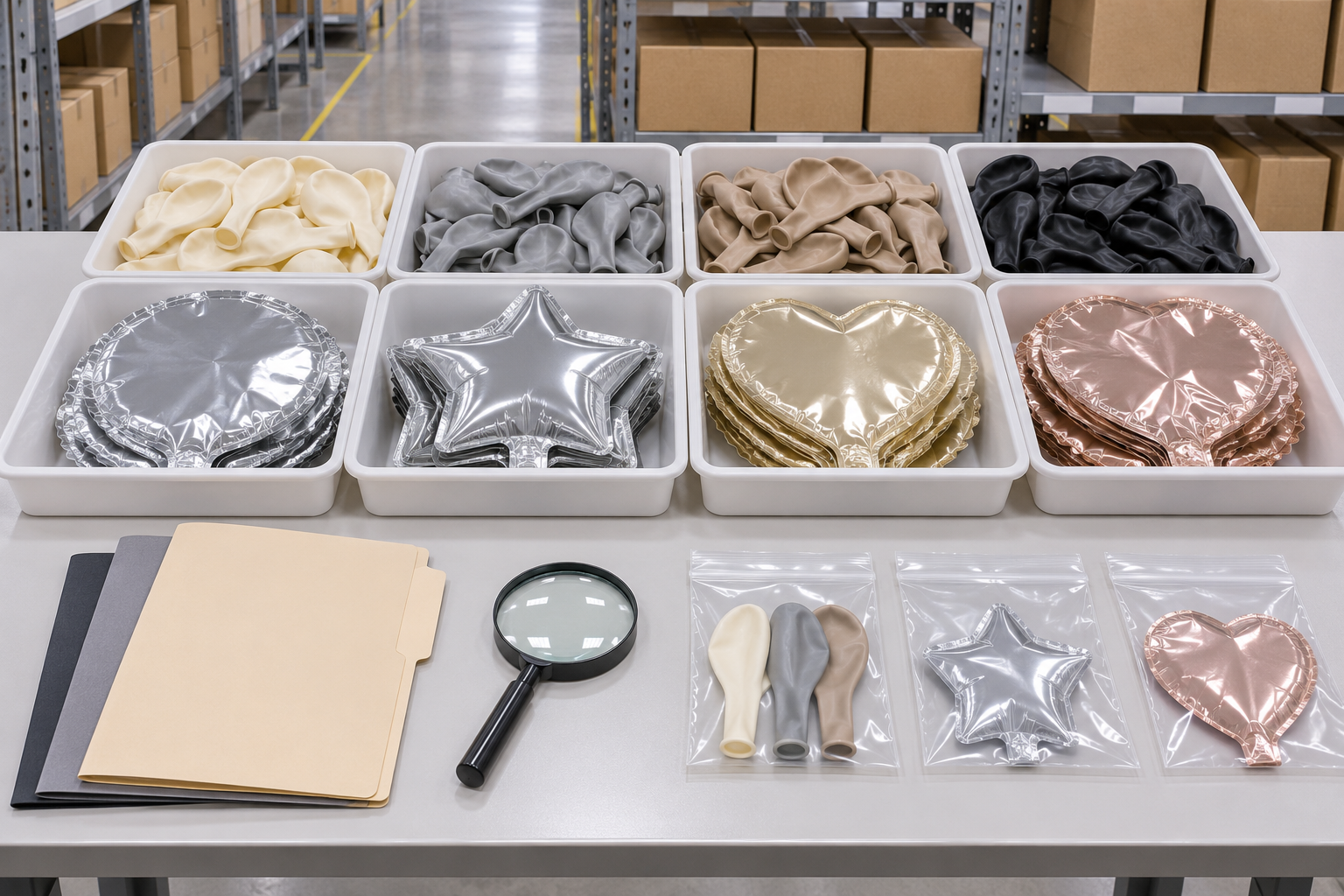
For a balloon wholesale supplier test report verification task, the buyer goal is not to collect paperwork for its own sake. The goal is to confirm that the specific balloon products being quoted for Europe are the same products described in a test report, that the report scope matches the agreed specification, and that any gaps are resolved in writing before an order is placed. In wholesale supply, reports can look similar while covering different materials, sizes, colours, printing methods, packaging formats, or production batches. A structured verification process helps procurement teams compare suppliers on a like for like basis, avoid assumptions, and create a clear record of what was checked, what was agreed, and what still needs supplier confirmation.
This page focuses only on test report verification for balloon wholesale supply into Europe. It does not replace product specification work, sampling, or pre-shipment inspection. Instead, it explains how to read a report as a buyer, how to link it to an RFQ and purchase order, how to handle differences between EU, EEA, UK, and country-specific expectations by asking for market-specific clarification rather than assuming one rule covers all of Europe, and how to document decisions so that repeat orders remain consistent.
How Test Report Verification Works in a Balloon Wholesale Supply Decision
Test report verification starts before a report is requested. The buyer first defines the exact balloon item to be supplied, in enough detail that a report can be matched to it without guesswork. That definition should cover product type, material family as described by the supplier, intended size range in the buyer specification, colour set, surface finish, printing or decoration method if any, packaging format for wholesale distribution, and intended use and sales channel as stated by the buyer. Without this baseline, a report may be genuine in itself yet irrelevant to the quoted item.
Once the baseline is agreed, verification follows a consistent sequence:
- Confirm the product identity in the report matches the quoted product description, sample reference, and specification sheet line by line.
- Check that the report identifies the tested item clearly enough to distinguish it from other balloons in the same catalogue.
- Review the scope of testing described in the report against the buyer requirement list, noting what is covered and what is not mentioned.
- Compare dates, version references, and product revisions in the report with the current quotation, and ask for an explanation of any mismatch.
- Record the outcome as accepted for this specification, accepted pending clarification, or not accepted for this order, with reasons noted in the procurement file.
A common buyer error is to treat a report cover page as sufficient. The useful information is in the detail: product description, item identification, test scope summary, results summary as presented in the report, and any limitations or remarks stated by the issuing body. If any of those sections are missing, illegible, or inconsistent with the quotation, the buyer should pause and request a complete, readable version and a written explanation. Verification is a matching exercise, not a judgement about a supplier based on a logo or a summary claim.
Buyers should also separate three different documents that are often confused. A test report describes testing on a defined sample or product type as stated in the report. A supplier declaration is a statement made by the supplier about its product. An inspection report describes checks on a specific shipment or batch at a point in time. Each document answers a different question, and one does not automatically substitute for another. In the RFQ, state which document type is required for which purpose, so suppliers do not send a generic file when a product-specific report was requested.
Europe Buyer Considerations for Report Scope and Market Alignment
Selling balloons into Europe involves more than one jurisdiction, and buyers should avoid assuming that a single report or statement automatically satisfies every destination within Europe. The European Union, the wider EEA, the UK, and individual countries can have different administrative expectations, language needs, labelling practices, and documentation requests from distributors, retailers, and importers. This article does not state those rules, because they depend on the exact product, destination, and sales model. Instead, the buyer task is to name the intended destination markets in the RFQ, ask the supplier what documentation it can provide for those named markets, and confirm with the buyer organisation and its downstream customers what they will accept.
Start by listing each destination country or market area for the order, the importer of record, and the party responsible for holding technical documentation. Then map each required document to a named market and a named product variant. If a balloon set will be sold in different packaging or language versions, check whether the report and supporting documents align with each version or only with one of them. Where a supplier provides a report that references a different market, a different packaging format, or a different product variant, record that as a scope gap rather than treating it as coverage.
Language and traceability also matter for Europe distribution. Ask whether report summaries, product identifiers, and packaging references can be cross-checked without relying on informal translation. Require consistent item codes across the quotation, report request, sample approval, and purchase order, so that a warehouse team or retail customer in the destination market can trace a delivered carton back to the verified specification. If the buyer will resell to multiple distributors, agree in advance which documents may be shared downstream and in what format, and which documents remain internal procurement records.
Finally, keep the product and RFQ decision intent primary. A country discussion is only useful when it changes a specification field, a document request, or an acceptance decision. For every Europe destination named in an order, the buyer should be able to answer three questions: which exact balloon variant will be sold there, which report has been verified for that variant, and who approved any remaining gap in writing. If any answer is unclear, verification is not complete.
Buyer Decision Table for Comparing Balloon Test Reports
Use the table below to compare suppliers and report files on the same buyer-defined criteria. The table contains process checks only. It does not rank suppliers, predict outcomes, or substitute for reading the full report.
| Decision Area | What to Check in the Report | Buyer Action Before Ordering | Risk if Left Unclear |
|---|---|---|---|
| Product identity match | Product description, material description as stated by supplier, size and colour identifiers, and sample or item reference match the quotation | Require a line by line match against the approved specification and sample reference before approving the report | A report for a different balloon type or variant is accepted by mistake |
| Scope coverage | Test scope summary in the report covers the buyer requirement list for this order, with no unexplained omissions | Ask the supplier to map each buyer requirement to a report section or state in writing where no mapping exists | Buyer assumes coverage for an item that was never described in the report |
| Variant and packaging alignment | Report product and packaging description aligns with the wholesale pack format, assortment, and decoration method being ordered | Specify the exact variant, assortment, and packaging format in the RFQ and confirm the report relates to that format | Retail or distributor packs differ from the verified product description |
| Currency and revision status | Report date, version reference, and product revision align with the current quotation and approved sample | Ask the supplier to confirm in writing that the report relates to the current product version offered | An older product version is verified while a revised version is supplied |
| Destination market alignment | Documents provided correspond to the Europe destinations named in the RFQ, without assuming EU, EEA, UK, or country coverage is interchangeable | Require the supplier to state which named destinations each document was provided for and note any destination not covered | Goods arrive for a market where the buyer file is incomplete |
| Traceability to order | Item codes, carton references, and specification references can be linked from report file to purchase order and delivery documents | Specify a consistent item code and document naming convention in the purchase order | Warehouse and quality teams cannot link delivered goods to the verified file |
| Gap handling | Limitations, remarks, and missing sections in the report are visible and explained | Require written clarification or a replacement document for every material gap before payment or production approval | Unresolved gaps are discovered after production or after goods are distributed |
After completing the table, record a single decision per supplier and per product variant. Mixing decisions across variants, for example accepting a report for one colour set and applying it to another without confirmation, weakens the whole verification file. If a supplier cannot provide a matching report, the buyer can still make a commercial decision, but that decision should be recorded as a documented exception with an approver name, a reason, and any additional checks the buyer will perform, such as enhanced sampling or pre-shipment inspection defined in the order terms.
Common Gaps Found During Verification and How Buyers Resolve Them
Most verification delays come from ordinary mismatches rather than from a single major failure. Product names differ between the catalogue, the quotation, and the report. A report describes an unprinted balloon while the order is for a printed design. An assortment report covers a mixed pack in general terms while the buyer needs clarity for each colour or finish in the pack. Packaging changes after sampling, but the document file is not updated. Each gap is resolvable if it is identified before production and handled through a written clarification, an updated specification, or a new document request.
Buyers resolve gaps more quickly when requests are specific. Instead of asking a supplier for better documents in general, name the exact field that does not match, quote the buyer specification reference, and state the document or written confirmation needed to close the gap. Set a response point in the procurement timeline, for example before sample approval, before production release, or before final payment, depending on the buyer internal process, and link that point in the purchase order conditions. Keep all clarifications attached to the same procurement file as the quotation and the approved sample record.
Another useful practice is a short verification log. The log lists the product variant, document name as provided by the supplier, date received, reviewer, match outcome, gaps raised, supplier response, and final buyer decision. Over repeat orders, the log shows whether a gap was a one-off formatting issue or a recurring mismatch for a particular product family or packaging format. It also prevents a new team member from re-accepting a document that a previous reviewer had already queried.
RFQ Checklist
Use this checklist when preparing an RFQ for balloon wholesale supply into Europe. Adapt the fields to the exact product variant and destination markets for the order, and keep the completed checklist with the quotation and verification log.
- Ask the supplier to provide a complete, readable test report that identifies the exact balloon product, variant, and packaging format quoted in the RFQ.
- Specify the product description, material description as to be stated by the supplier, size, colour set, decoration method, and wholesale pack format that the report must match.
- Require the supplier to map each buyer requirement in the RFQ to the relevant section of the report or to confirm in writing where no section applies.
- Ask the supplier to confirm in writing that the report relates to the current product version offered and to explain any difference in dates, versions, or item references.
- Specify every intended Europe destination market for the order and ask the supplier to state which documents are provided for each named destination without assuming coverage transfers between the EU, EEA, UK, or individual countries.
- Require consistent item codes and document references across the quotation, sample approval, purchase order, and delivery paperwork for traceability.
- Ask the supplier to highlight any limitations, remarks, or missing sections in the report and to provide clarification before production release.
- Specify the buyer approval step for report verification, including who approves, what decision outcomes are allowed, and how exceptions will be recorded and signed off.
- Require the supplier to notify the buyer in writing of any change to product material, decoration, or packaging after verification and to provide updated documents where the change affects the verified specification.
- Ask the supplier to confirm which documents may be shared with the buyer downstream distributors or retail customers in the named Europe markets and in what format.
A complete RFQ does not guarantee a complete report file, but it removes the most common source of delay: a vague request. When the RFQ names the product variant, the destination markets, the document type required, and the approval step, suppliers can respond precisely and buyers can compare responses fairly. Keep verification focused on matching, scope, and written agreement. That discipline protects repeat orders, supports consistent wholesale supply, and gives every party a clear record of what was checked before goods moved into distribution in Europe.
Discuss Your Requirements
Review our manufacturing capabilities, then share your specifications for a supplier-fit review.