Paper Plate OEM Business Continuity Planning for United States Buyers
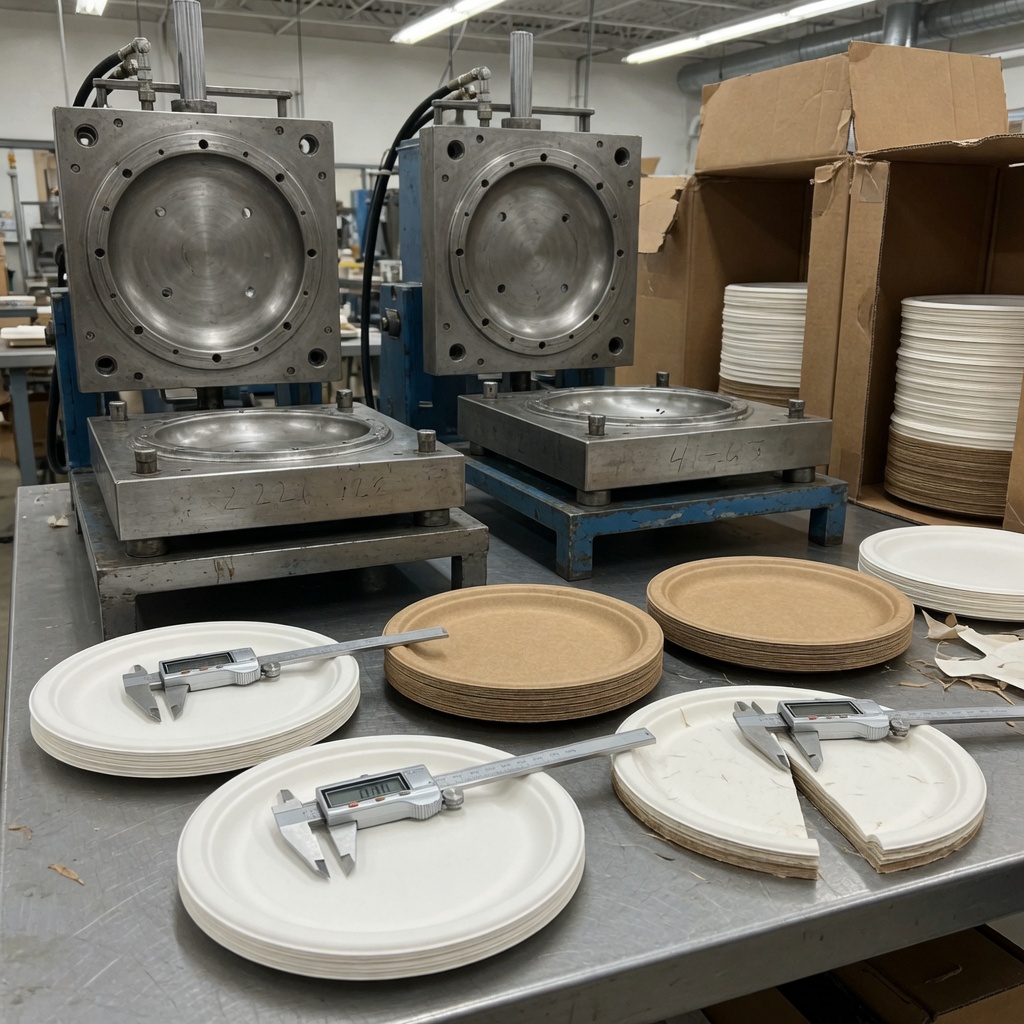
Do not award a paper plate manufacturing program for United States retail, club, foodservice, or party-supply distribution until the OEM produces current, tested business continuity planning evidence for that SKU. Treat paper plate OEM business continuity planning as a contract gate, not a brochure line. Specify the critical-path recovery time objective (RTO), backup converting path, dual-source materials, English label failover, and landed-cost buffer. Compare those fields across OEM quotes, verify dates and first articles, then release volume.
United States buyers should require a dated plan that names RTO for pulp or board supply, forming or pressing, coating or lamination, printing, packing, and outbound warehousing. The same plan should identify backup tools, shifts, or sites that can hold the specification, and state how food-contact, size, print, case pack, and pallet pattern stay identical after a failover.
By Vincent Xi, Editorial Author, Joyline Party Supply (author profile). This page does not claim factory visits, tests, certifications, or customer outcomes. It translates published BCP assessment practice into RFQ language United States buyers can apply to paper plate manufacturing awards. Numeric figures below are labeled example calculations or buyer-set controls to verify in the supplier quote and warehouse file; they are not Joyline measurements.
Published manufacturing BCP guidance frames evidence as a pre-contract request and requires plans that reconnect operations after disruption—including supplier dependencies, inventory, technology failures, and regulation—not only IT recovery (Info-Tech Research Group). Third-party vendor reviews likewise look for a documented plan, business-impact analysis (BIA) values for RTO, recovery point objective (RPO), and maximum tolerable downtime (MTD), plus testing, personnel, relocation, and notification procedures (Venminder). An OEM paper plate manufacturer page that lists production continuity, supply continuity, MOQ, lead time, and scalable recurring-order capacity is a comparison prompt only; it is not an award file (VAV Paper). Those sources do not publish paper plate mold recut days, coating weights, or United States DC slotting rules. Converting objects in this RFQ language come from the buyer drawing pack and the OEM quote.
Specify these five fields before comparing unit price
- SKU critical-path RTO (longest of mill, mold, coat, print, pack, and United States transit) versus buyer DC days-on-hand.
- Named backup converting path and whether molds or dies are duplicated.
- Dual-source or safety-stock policy for board or pulp, coating resin, and food-contact inks.
- Failover English label, lot-code syntax, country-of-origin line, and claim-chain rules.
- Last BCP test date plus a written notification SLA to a named United States contact.
If an OEM cannot fill a field with a dated document, treat the field as open risk and do not award.
What United States paper plate manufacturing programs should lock in BCP scope
A paper plate is a food-contact converting product. Continuity is not a generic factory restart. Scope the BCP to every step that can stop a shippable SKU:
- Substrate: molded-fiber pulp furnish or paperboard caliper, basis weight, and wet-strength chemistry.
- Forming or pressing: molds, dies, heat, and cycle time that lock diameter, depth, and rim profile.
- Barrier or finish: PE, PLA, or other coating weight if the SKU is grease- or moisture-resistant.
- Print and decoration: plate count, color, and food-contact ink system for private-label artwork.
- Secondary pack: sleeve or poly, inner count, master carton ECT or burst, and the pallet pattern the United States DC already slots.
- Compliance pack: English labeling, lot code, country of origin, and any FDA food-contact file the importer’s counsel requires for United States entry and resale.
- Logistics: export packing, container stuffing, and the United States DC receiving window the program actually uses.
If any of those steps has a single tool, single mill, or single ink kitchen, the BCP is incomplete even if the OEM has a second warehouse. The same published reviews that ask for supplier-dependency and inventory treatment, and that fail incomplete or untested vendor files, still leave the converting-cell list to the buyer’s drawing pack.
Worked example 1 — cover versus RTO (example calculation to verify in the supplier quote and the buyer’s WMS; not a measured factory result; no as-of factory date; not Joyline data). Scope: one hypothetical United States club or foodservice paper plate SKU. Assumptions: weekly demand is 80,000 plates per week; the buyer’s United States warehouse holds 12 calendar days of supply of that SKU; unmitigated converting RTO is 21 calendar days. Simplified days-of-supply arithmetic: 21 calendar days RTO minus 12 calendar days cover leaves a 9-calendar-day stockout unless a qualified dual source or pre-built buffer is already in the contract. Replace 80,000 plates per week, 12 calendar days, and 21 calendar days with WMS and quote values before award.
Business continuity planning evidence: documents, tests, and RTO definitions
Ask for artifacts, not adjectives. A usable evidence pack for paper plate OEM business continuity planning typically includes:
- A dated BCP (or BCM manual) covering the converting site(s) that will run the awarded SKU, with issue date and next review date on page 1.
- A BIA excerpt that states RTO, RPO, and MTD for the paper plate line, the coating or print cell, and finished-goods warehouse—not only for ERP—each with a unit of hours or calendar days.
- A test calendar and the last two test after-action reports (tabletop or live), including what failed.
- A named crisis notification tree with hours-of-operation contacts for United States buyers.
- A raw-material dual-source or safety-stock policy for pulp, board, coating resin, and food-contact inks.
- A relocation or backup-press statement: which molds or dies are duplicated, which are unique, and how many calendar days to recut a mold if the unique tool is lost.
- Change-control so a failover SKU cannot silently change caliper, coating weight, or print registration.
Venminder lists a documented plan, BIA-derived RTO/RPO/MTD, testing, personnel strategies, relocation options, and notification policies as the core review set for critical manufacturing vendors (Venminder). Info-Tech separately stresses that buyers request evidence before contract signature and that manufacturing plans must reconnect operations after disruption, not only restore servers (Info-Tech Research Group). The converting-cell list above is RFQ application of those review elements to paper plate manufacturing; it is not a finding those sources measured on a plate line.
ISO 22301 note (standard versus practice). ISO 22301 is a business continuity management system standard. Naming it in an RFQ is a documentation request, not proof that any named OEM is certified. Do not treat a certificate claim as current without a valid document, scope statement, and expiry date. Joyline Party Supply is not asserting certification in this article.
Worked example 2 — longest-path RTO (example assumption to verify in the supplier quote; not a measured factory result; no as-of factory date; not Joyline data). Scope: one paper plate SKU converting critical path. Assumptions: packing RTO 72 hours; mold recutting 18 calendar days; board-mill recovery 10 calendar days. A 72-hour RTO for packing only is not a 72-hour RTO for the SKU. Record the longest critical-path RTO (here 18 calendar days, if those assumptions hold), not the shortest cell RTO.
Dual sourcing, backup converting, and private-label identity risk
United States retail and foodservice programs fail continuity when the backup plate is only close enough. Rim roll, plate stiffness, grease strike-through, and print-to-cut registration are visible to the end user. Dual-source or backup-OEM language must lock:
- Diameter and depth (example drawing object to confirm, not a catalog nickname: 9 in dinner plate; unit conversion using 1 in = 25.4 mm exact, so 9 × 25.4 mm = 228.6 mm—use the signed drawing, not this page, as the specification).
- Basis weight or molded-fiber grammage and rim-thickness tolerance.
- Coating type and coat weight if used.
- Color standard (printed PMS or unprinted white/kraft target) and food-contact ink system.
- Case count, carton size, and pallet Ti-Hi that the United States DC already slots.
- Lot-code format so recall procedures still work after failover.
OEM literature that stresses scalable supply and recurring-order reliability is useful only if the second path can hold those attributes (VAV Paper). Dual sourcing that changes pallet height can still stop a United States warehouse even when plates are physically available.
Measurable trade-offs to price on the same RFQ form
- Lower MOQ at a single press versus higher unit cost with duplicated molds and a second qualified mill.
- Thin United States safety stock versus higher inventory carrying cost and lower stockout probability.
- Aggressive contractual RTO versus the OEM’s real mold lead time and resin dual-source status.
- One private-label printer versus two approved ink kitchens that have already run the same food-contact set.
- FOB origin price versus landed cost that includes a paid buffer container into a United States DC.
Worked example 3 — tooling versus avoided gap (example calculation to verify in the supplier quote and the buyer finance file; not a measured factory result; no as-of factory date; not Joyline data). Scope: one hypothetical 9 in private-label paper plate SKU sold in the United States. Assumptions: duplicated mold set costs USD 8,500 (obtain the OEM tooling quote); unmitigated gap is 11 calendar days; demand is 80,000 plates per week; contribution is USD 0.04 per plate. Plate volume in the gap: 80,000 plates/week × (11/7) week = 125,714.29 plates. Avoided contribution: 125,714.29 plates × USD 0.04/plate = USD 5,028.57 (rounded to the cent). Under these labeled assumptions, USD 8,500 tooling exceeds USD 5,028.57 avoided contribution before retail penalties, substitutions, or chargebacks. Compare the buyer’s actual demand, contribution, gap, and penalty clauses to tooling; do not assume duplicated molds pay back.
Landed cost, labeling, and delivery continuity into the United States
A recovered factory that ships the wrong label is still a continuity failure. For United States receiving, specify in the BCP and the quality agreement:
- English product identity, count, and any fiber or coating claims the buyer actually uses.
- Lot code and production date readable after ocean or domestic transit.
- Country of origin marking consistent with US Customs practice for the chosen manufacturing origin (origin is a specification object, not a sales-market target).
- Food-contact support file (composition, applicable 21 CFR citations the OEM asserts, and migration or supplier declarations) held by the importer of record’s counsel—not implied by this article.
- Pallet heat-treatment or ISPM-15 status if wood pallets are used. ISPM-15 is a phytosanitary wood-packaging standard; requiring marked pallets is a buyer specification, not a claim that any OEM holds a current certificate.
- A United States port or DC playbook: which SKU can divert, which cannot, and who pays detention if a backup lot arrives unlabeled.
Landed-cost continuity is a planning object. Worked example 4 — backup transit (example assumption to verify against the actual backup site; no as-of factory date; not Joyline data). If backup production adds 7 calendar days of inland transit, the contractual RTO must include that transit, not only press restart. Manufacturing BCP work that ignores regulation and inventory will not protect a United States program (Info-Tech Research Group).
Do not treat forest, compostable, or similar claim files as converting capacity. If the backup mill is not in the same claim chain, the SKU cannot ship under the original claim even if plates exist. Brochure language about production continuity does not replace that file (VAV Paper). Put claim-chain failover in the RFQ if the brand needs it.
Buyer decision table: specify, compare, verify, approve
| Decision object | Specify in RFQ | Compare across OEMs | Verify before award | Approve / order control |
|---|---|---|---|---|
| SKU critical-path RTO | Longest of mill, mold, coat, print, pack, and United States transit (hours or calendar days) | Shorter RTO vs higher dual-source cost | BIA excerpt plus last test report; request current issue date on the document | No PO release if RTO exceeds United States safety-stock cover |
| Backup converting path | Named second press or second site; mold duplication yes/no | Single-site recovery vs true second path | Tool list and photo or drawing of duplicate molds; no logo required | Dual-path SKU only if first-article on backup path is signed |
| Raw material dual source | Pulp/board, coating resin, food-contact ink each have a named alternate | Price of dual-source vs single mill | Mill certificates and receipt records for a buyer-set window (example: last 90 calendar days; confirm in RFQ; not an industry measurement) for the awarded SKU only | Hold new artwork until both ink kitchens are qualified |
| United States inventory cover | Buyer DC days-on-hand + inbound pipeline | Carrying cost vs stockout | WMS snapshot plus open PO ETA | Reorder point reset when OEM RTO changes |
| Label and claim failover | English label file, lot syntax, origin, forest or compostable claims | Claim-preserving backup vs claim-drop backup | Pre-approved backup dieline in the same artwork vault | Do not ship unlabeled backup lots into United States retail |
| Notification | Written alert to a named United States merchandiser; hour target is a buyer-set SLA (example: 4 hours—confirm in the quote; not an industry measurement) | Speed vs noise | Tabletop that includes a missed-shift scenario | Escalation clause in the manufacturing agreement |
| Test evidence | Live or hybrid test of converting restart on a buyer-set interval | Paper policy vs tested workflow | After-action with defects listed | Condition subsequent: missing test = no annual volume award |
| Private-label identity | Diameter, rim, coat weight, print ΔE, carton, pallet Ti-Hi | Equivalent plate vs identical plate | Backup-path first article vs golden sample | Chargeback if failover SKU fails AQL on those attributes |
Every row is an award control. Incomplete supplier BCP files are a known assessment failure mode (Venminder).
Practical RFQ checklist for paper plate OEM business continuity planning
Use this list inside the manufacturing RFQ and the quality agreement. Each item is something a United States buyer can specify, compare, verify, approve, or order.
A. Documents and tests
- Attach the current BCP PDF for the converting site that will run this paper plate SKU; require issue date and next review date on page 1.
- Require a BIA table with RTO, RPO, and MTD for pulp/board intake, forming/pressing, coating, print, packing, and finished-goods warehouse, each with unit (hours or calendar days).
- State the maximum acceptable SKU RTO in calendar days equal to or less than the buyer’s United States DC cover plus pipeline (buyer fills the number from WMS; do not accept OEM marketing lead time as RTO).
- Demand the last two BCP test records, including date, scenario, defects, and close-out owner.
- Specify a written incident notice to a named United States email and phone; treat 4 hours as a buyer-set SLA example to confirm in the quote, not as an industry measurement.
- Make annual volume release conditional on a BCP test not older than 12 months as of the release date (12 months is a buyer control to set in contract, not a measured industry average).
B. Converting path and materials
- List molds/dies by SKU; mark each as duplicated or unique; if unique, state recut lead time in calendar days and who pays.
- Name backup coating and backup print cells; require a first-article protocol on the backup path before volume award.
- Require dual-source or safety-stock policy for board or pulp, coating resin, and food-contact inks, with minimum days of cover (OEM proposes; buyer verifies).
- Lock plate drawing: diameter, depth, rim thickness, basis weight or grammage, and coating coat-weight tolerance; failover lots must meet the same drawing.
- Ask whether OEM paper plate manufacturing capacity for this SKU is reserved or shared; reserved weekly output must be a number of plates, not a percentage slogan.
- Require a spare-mold storage clause for a negotiated term (example term to negotiate: 24 months; not a measured industry average) so tooling is not scrapped between seasons.
C. United States labeling, claims, landed cost, and delivery
- Lock case count, carton outside dimensions, and pallet Ti-Hi used by the United States DC; reject backup packs that change slotting.
- Require English label files and lot-code syntax for both primary and backup sites, including country of origin line.
- If a forest or compostable claim is used, require the backup mill’s chain-of-custody status in writing; otherwise forbid the claim on failover lots.
- Require food-contact documentation the importer’s counsel will file; this article does not certify any 21 CFR position.
- Add a landed-cost line for a buffer container into a named United States DC, with validity date on the freight assumption.
D. Award and order controls
- Price three continuity options on the same RFQ form: (A) single path, (B) duplicated molds at one site, (C) second qualified site—each with unit price, MOQ, and RTO.
- State AQL and chargeback for failover lots that fail rim, leak, print, or carton attributes.
- Require the OEM to map which continuity claims in its brochure (production continuity, scalable supply, recurring orders) are contractually binding for this SKU (VAV Paper).
Source contexts, method, and what to verify
Source contexts. Three public contexts inform this page: (1) manufacturing BCP design and the buyer demand for pre-contract evidence (Info-Tech Research Group); (2) supplier BCP assessment elements used in third-party operational-resilience reviews, including RTO/RPO/MTD, testing, relocation, and notification (Venminder); (3) an OEM paper plate manufacturer’s public emphasis on production continuity, supply continuity, MOQ, lead time, and scalable recurring supply as B2B procurement language (VAV Paper). Those contexts describe what buyers should ask. They are not Joyline factory records, not a ranking of OEMs, not keyword-demand evidence, and not a certificate.
Methodology. Editorial synthesis only. Vincent Xi, Editorial Author (profile: https://joylinepartysupply.com/authors/vincent-xi/), mapped the published BCP assessment criteria to the converting steps that can stop a paper plate SKU. Exact numbers are labeled as example calculations, unit conversions, or buyer-set controls to confirm in WMS data and supplier quotes. Inch-to-millimetre figures use 1 in = 25.4 mm exact and are drawing-unit conversions, not measured plates.
Limitations / what to verify. BCP PDFs go stale; a plan without a test date is not evidence. RTO for IT is not RTO for molds. Dual-source plates can fail United States slotting, labeling, or claim-chain even when capacity exists. Food-contact, origin marking, ISPM-15 wood packaging, and forest or compostable claims require current documents and counsel—not this page. Freight days, tooling dollars, weekly demand, contribution per plate, notification hours, test recency, receipt windows, and spare-mold storage terms used above are example assumptions or buyer-set controls: replace them with the RFQ response, the OEM’s mold quote, and the buyer’s warehouse snapshot before any award. Do not infer that Joyline Party Supply or any named OEM holds a given certification, test result, or customer outcome. Confirm every number, date, and site on the quote that will actually produce the United States program.
United States buyers who keep paper plate OEM business continuity planning inside the manufacturing RFQ—RTO on the critical path, backup converting that holds the drawing, and documents that match the last test—reduce stockout and private-label identity risk without turning the award into a slogan. Request the evidence pack, run the decision table, and do not release volume until the backup path has a signed first article.
Discuss Your Requirements
Review our manufacturing capabilities, then share your specifications for a supplier-fit review.