Party Decoration Wholesale Supplier Product Development Capability for Buyers in Canada
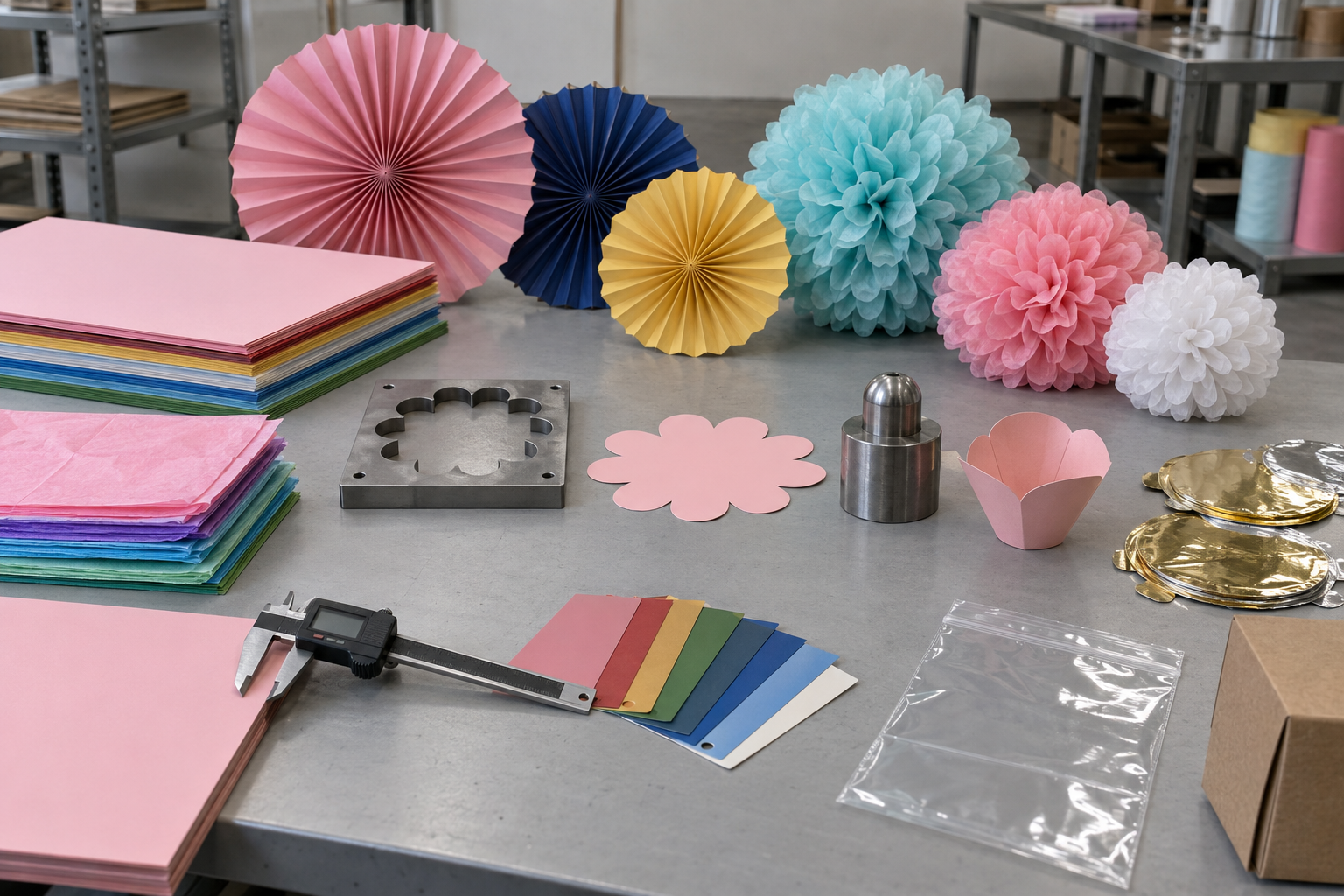
A party decoration wholesale supplier product development capability is the supplier’s ability to turn a buyer’s brief into an approved, repeatable decoration—artwork, structure, materials, packaging, and a production path—before a bulk order is placed. For buyers in Canada, the practical test is not an OEM or ODM slogan. It is whether the supplier can show who designs the item, who owns the mold or die, how sampling is timed, what minimum order applies, and which quality checks happen before shipment. Published manufacturer pages and a sourcing guide titled 2026 describe those checkpoints in concrete terms. They are reference points for a request for quotation, not a specification for every factory and not a Joyline Party Supply production claim. The buying task on this page is wholesale supply of party decoration goods, limited to product development capability.
This brief is prepared by Vincent Xi, Editorial Author at Joyline Party Supply (https://joylinepartysupply.com/authors/vincent-xi/). The role is editorial. It does not record a factory visit, a laboratory test, a client outcome, or a first-hand trial of any sample.
How Buyers in Canada Should Score Product Development Capability
A usable development file for a Canada-destined order has three outputs. The first is a frozen specification: materials, dimensions, color reference, print or forming method, and pack contents. The second is a commercial path: sample fee, tooling or mold status, minimum order, and lead time split into development versus mass production. The third is an evidence pack: who performs design, whether the contracting site controls production, and what will be checked before goods leave.
Public pages illustrate how those outputs are marketed, and they do not describe Joyline’s own plant. Sunbeauty presents itself as an OEM/ODM manufacturer of customized party supplies, with an in-house design team developing new products for ODM projects, sampling stated as 2–5 days, a facility stated as 7,500+ m², plus equipment, quality control, and custom packaging, while stating compliance with international standards (Sunbeauty manufacturing solutions). Nicro describes an R&D team, states that it invests 10% of annual revenue in R&D, cites 200+ themed options and 34 colors, and states a flexible MOQ starting at 300–500 sets, with OEM and private-label work from product design through packaging (Nicro custom party supplies). A SourcifyChina guide titled as a 2026 sourcing guide tells buyers to verify in-house R&D or design capability, mold ownership, and production evidence, and to separate factories that control OEM/ODM work from trading companies, using clusters such as Yiwu as a sourcing clue for wholesale party decorations (SourcifyChina wholesale party supplies guide).
None of those pages names Canada, a Canadian port, a duty rate, or a bilingual packaging statute. Destination, ship-to terms, and any languages the buyer needs on the pack belong in the RFQ as the buyer’s own commercial requirements. This brief does not supply legal or freight figures the sources do not contain.
Use each published number only inside its stated scope:
- Sampling window: 2–5 days, as Sunbeauty states for its sampling. The excerpt gives no as-of date and does not say whether artwork approval, toolmaking, or courier time is included.
- Facility size: 7,500+ square metres, as Sunbeauty states for its facility. Floor area is not pieces per day.
- R&D share: 10% of annual revenue, as Nicro states. The excerpt names neither the fiscal year nor the revenue base, so the percentage cannot be converted into a currency budget.
- Catalog breadth: 200+ themed options and 34 colors, as Nicro states. Breadth is not the count of new tools that can be opened in one season.
- MOQ: 300–500 sets, as Nicro states for a flexible starting minimum. The excerpt does not define how many pieces sit inside one set.
Party Decoration Wholesale Supply Claims: OEM, ODM, and What They Leave Out
OEM and ODM are commercial labels until the file shows control. On the Sunbeauty page, OEM/ODM is tied to an end-to-end description: design and prototyping through production and shipping, with an in-house design team for ODM projects. On the Nicro page, OEM and private label sit beside an R&D team, hand-drawn design, and original multicultural styles. The SourcifyChina 2026 guide treats the label as something to test: look for in-house R&D or design control, mold ownership, and production evidence rather than accepting the letters on a website.
For party decoration wholesale supply, the buyer-relevant split is who originates the structure. Buyer-owned artwork and structure—the pattern often called OEM on these pages—means the supplier executes a drawing the buyer already approved. Development risk is mainly fidelity of color, dimension, material, and pack. Supplier-originated design—the pattern often called ODM—means the supplier proposes shapes, themes, or colorways. Development risk then includes who owns the design and the tool after the first order.
The figures do not travel across those two patterns. Nicro’s 10% of annual revenue is a stated investment rate, not a headcount, a patent count, or a sampling promise. Sunbeauty’s 2–5 day range is a stated make-time band for that company’s sampling, not evidence that a new die for a complex centerpiece finishes inside the same band. The SourcifyChina guidance is a verification method. The excerpt does not publish a percentage of suppliers, in Yiwu or elsewhere, that pass a factory-versus-trader test. Naming Yiwu is a manufacturing-origin clue from that guide. It is not proof that any named supplier produces there, and it is not an offer to buyers outside the sales market of this page. The purchase context here is Canada.
Decision Table: Compare Product Development Capability Before the PO
Read each row as a comparison aid. The published-example column quotes third-party pages. It is not a Joyline quotation and not a default commercial offer.
| Buyer decision | Published example, with unit, scope, and source limit | What to verify before approval or order |
|---|---|---|
| Who develops the item | Sunbeauty states an in-house design team for ODM work; Nicro states an R&D team and hand-drawn design. Neither excerpt is dated. | Confirm the employer of the people who will draw this SKU, and whether that employer is the contracting factory. |
| How fast a sample appears | Sunbeauty states 2–5 days for sampling. No as-of date; transit is not stated as included. | Split the quote into design days, tool or die days, sample-make days, and courier days to the Canadian address. |
| How large a claimed site is | Sunbeauty states a facility of 7,500+ m². Area is not throughput. | Ask for dated production evidence of the process this SKU will use, not floor area alone. |
| How R&D spend is described | Nicro states 10% of annual revenue for R&D. Year and revenue base are absent from the excerpt. | Do not score an unaudited percentage. List the drawings, revisions, and samples this order includes. |
| How wide the ready range is | Nicro states 200+ themed options and 34 colors. Scope is that company’s stated range. | Name the theme, the physical or numeric color standard, and which colors are stock versus a custom mix. |
| What minimum applies | Nicro states a flexible MOQ starting at 300–500 sets. Pieces per set are not defined. | Convert the offer into pieces after the set contents are written down, and note any extra MOQ for a pack change. |
| Who controls OEM/ODM | The SourcifyChina guide titled 2026 says to separate factories with OEM/ODM control from trading companies. | Name the legal manufacturer, any trading company, and the site address where the decoration is made. |
| Who owns the tool | The same guide says to check mold ownership. Neither manufacturer excerpt states a default ownership rule. | Write ownership, exclusive use, storage, and the fee to move the die, mold, or plate if reorders stop. |
One arithmetic check is an assumption to verify in the supplier quote, not a market price and not a Joyline term. Take the low end of Nicro’s stated band, 300 sets, as published for that supplier’s flexible MOQ. If the quote defines one set as 1 piece, the piece minimum is 300 pieces. If the quote defines one set as 12 pieces, the piece minimum is 3,600 pieces. The sources do not define pieces per set; the 12-piece figure is only an assumption so a buyer can see how large the gap can be. Confirm the set definition before comparing two quotations. The same caution applies to 500 sets at the top of that published band: piece count moves in proportion to the unverified set size.
A second assumption to verify, not a transit promise: Sunbeauty’s stated 2–5 day sampling window is the make-time band that page claims. Add internal art-approval days, and add courier days to a named Canadian address, only after the supplier and the carrier each put those days in writing. Do not insert an ocean-freight duration. These sources do not publish one.
Sampling, Tooling, Color, and MOQ Trade-offs
The measurable trade-offs are speed against tool status, catalog breadth against a new silhouette, a stated R&D rate against included deliverables, and a low piece count against total program cost.
Sampling speed depends on whether a tool already exists. A 2–5 day sample, in the sense Sunbeauty states it, fits a short make cycle when a cutting die, forming tool, or print plate is already approved. A new structure—an unreleased topper profile, a new foil shape, a new paper-fan diameter—needs tool design before that clock starts. The sources do not publish a separate mold-lead-time number. A sample promise that omits tool status is an incomplete quote.
Catalog breadth is not the same purchase as custom development. The 200+ themes and 34 colors Nicro states can serve a buyer who accepts an existing theme and changes color or label. They do less for a buyer who needs a proprietary silhouette. Private label on an existing shape is a packaging and print project. A new silhouette is a tooling project. The RFQ should say which of the two is being bought. Nicro’s mention of hand-drawn design and full customization from product design to packaging, and Sunbeauty’s mention of custom packaging, describe service scope on those pages. They do not set the number of revisions included in a Canada-bound order.
R&D percentage is a poor ranking metric. Ten percent of annual revenue, as Nicro states it, means that company describes a standing design budget. It does not say how many concepts are exclusive, whether a rejected concept fee is credited against the bulk order, or which fiscal year the rate refers to. Score the deliverables on the quotation instead.
MOQ changes how development cost is recovered. The 300–500 set band is Nicro’s published starting range, not an industry standard and not a Joyline minimum. A lower piece count can raise the unit price or push tooling into the sample invoice. A higher piece count can cut the unit price while leaving seasonal inventory in Canada. Compare total program cost: tooling, plus sample fees, plus approved quantity times unit price, plus freight to the named Canadian destination. No source here publishes those currency rates. Leave the cells blank until the quotation arrives. Duty and brokerage are outside these sources; the buyer’s broker has to price them.
Facility area is likewise indirect. A stated 7,500+ m² site does not identify inspection points for party decorations—incoming paper or film, print registration, cut tolerance, assembly, pack count, and carton condition. Sunbeauty states that it uses quality control and custom packaging and that it complies with international standards. The excerpt does not name a standard, a laboratory, a certificate number, or an expiry date. A sentence about international standards is not a certificate. Do not record the supplier, or this publisher, as certified on the basis of that sentence.
Quality, Mold Ownership, and Factory-versus-Trader Checks
The SourcifyChina guide’s useful core for this intent is a sequence: review in-house R&D or design capability for the custom product, check mold ownership, review production evidence, and separate a factory that controls OEM/ODM work from a trading company. The guide also points to compliance and cost strategy, without numeric duty tables in the excerpt used here.
Design evidence for a specific item is a concept sheet, a structural drawing with units in millimetres, and a revision log for that SKU. A portfolio stated as 200+ themes shows range on Nicro’s page. It does not show that this SKU was drawn by the contracted factory.
Tool evidence should match the process. Party decorations often depend on cutting dies, forming molds, or print plates rather than one plastic injection mold. The buyer needs the tool type, written ownership, whether the shape is exclusive, where the tool is stored, and what happens if a repeat order is placed months later. The manufacturer excerpts do not state those terms. The 2026 sourcing guide only flags ownership as a check (SourcifyChina wholesale party supplies guide).
Production evidence should be lot-level. Floor area on the Sunbeauty page and a cluster name in the sourcing guide are indirect. Stronger evidence is a sample made on the same process the bulk order will use, not a handmade showroom piece that cannot be repeated. A trading company can still be the contracting party if it discloses the factory and passes mold terms through. The risk is a development file that cannot be reordered after the trader changes plants. The approved sample site and the bulk site should match, unless a written change is accepted first.
Where a page says “international standards” without naming them, keep the sentence as a claim. This article does not adopt any standard as Joyline practice and does not assert that any company holds a current certificate. If the sales channel requires a named test, the buyer has to name it and require a report matched to the material, color, and lot. Private-label support, which both manufacturer pages describe in general terms, still needs artwork ownership, barcode ownership, and the languages printed on the pack written into the order. Do not assume an existing export carton meets a Canadian retailer’s routing or language needs; these sources do not describe that packaging.
RFQ Checklist
- Ask the supplier to state in writing whether this party decoration is buyer-owned OEM execution or supplier-originated ODM design, and to name the legal entity that employs the people who will draw it.
- Require the manufacturer to quote sampling as separate day counts for art, tooling or die work, sample making, and courier delivery to the named address in Canada, and to map any 2–5 day claim onto those buckets before it is accepted.
- Specify the set definition in pieces, then require sample quantity and bulk MOQ in both sets and pieces, treating a published 300–500 set band only as a comparison point to reconfirm.
- Ask the supplier to identify the die, mold, or plate type and to state ownership, exclusivity, storage site, and the fee to release the tool before development spend is approved.
- Require the manufacturer to name the production address used for the approved sample and to confirm that bulk production will use that address unless a written site change is approved.
- Specify materials, dimensions in millimetres, color standard, print or forming method, and pack contents so the sample can be accepted or rejected against measurements.
- Ask the supplier to list in-process checks and pre-shipment checks, and to attach any test report it relies on, including standard name, laboratory, date, material, and lot, without treating an “international standards” sentence as a certificate.
- Require the quotation to itemize tooling, sample fees, unit price, packaging, and freight to the Canadian destination so program cost can be compared; leave duty and brokerage to the buyer’s broker because these sources do not state them.
- Specify the languages, barcodes, and private-label files required on the pack, and ask whether a packaging-only change changes MOQ or lead time.
- Require the supplier to confirm that advertised catalog figures—theme count, color count, facility area, or R&D percent of revenue—are not the specification of this order.
Methodology, Sources, and What This Brief Cannot Verify
How the figures were derived. The numbers in this article were taken from three public pages and were not remeasured. Sunbeauty’s customized party-supplies page supplied the 2–5 day sampling range, the 7,500+ m² facility figure, the in-house ODM design description, and the unnamed international-standards statement. Nicro’s custom party-supplies page supplied the 10% of annual revenue R&D statement, the 200+ themes, the 34 colors, the hand-drawn design description, and the 300–500 set MOQ band. SourcifyChina’s guide, titled as a 2026 wholesale party-supplies sourcing guide, supplied the Yiwu cluster reference and the instruction to verify in-house R&D, mold ownership, production evidence, and factory-versus-trader status. No search-volume, CPC, difficulty, traffic, or ranking figure is used, because none is established for this page. No Joyline price list, audit, or factory record was used, because none is in the source set. The set-to-piece arithmetic and any added courier days are labeled assumptions for the quotation, not sourced measurements.
Author basis and limits. Vincent Xi is the named Editorial Author, profile at https://joylinepartysupply.com/authors/vincent-xi/. That byline does not include first-hand factory experience, client projects, or test results, so those claims are omitted. The excerpts may be shorter than the live pages. Several numbers have no as-of date, fiscal year, or unit definition. Manufacturer statements are marketing claims, not independent inspections. A sampling range can exclude tooling and international courier time. A revenue percentage cannot be audited from the excerpt. “Sets” can hide different piece counts. Facility area is not throughput. A cluster name is not a factory address. An unnamed standards claim is not a certificate and is not this publisher’s practice. Canada-specific duty, tax, labeling law, and door-to-door transit days are outside these sources; confirm them on the quotation and with a customs broker before treating a development plan as a landed-cost plan. Re-check every figure against the current supplier document at order time.
Discuss Your Requirements
Review our manufacturing capabilities, then share your specifications for a supplier-fit review.