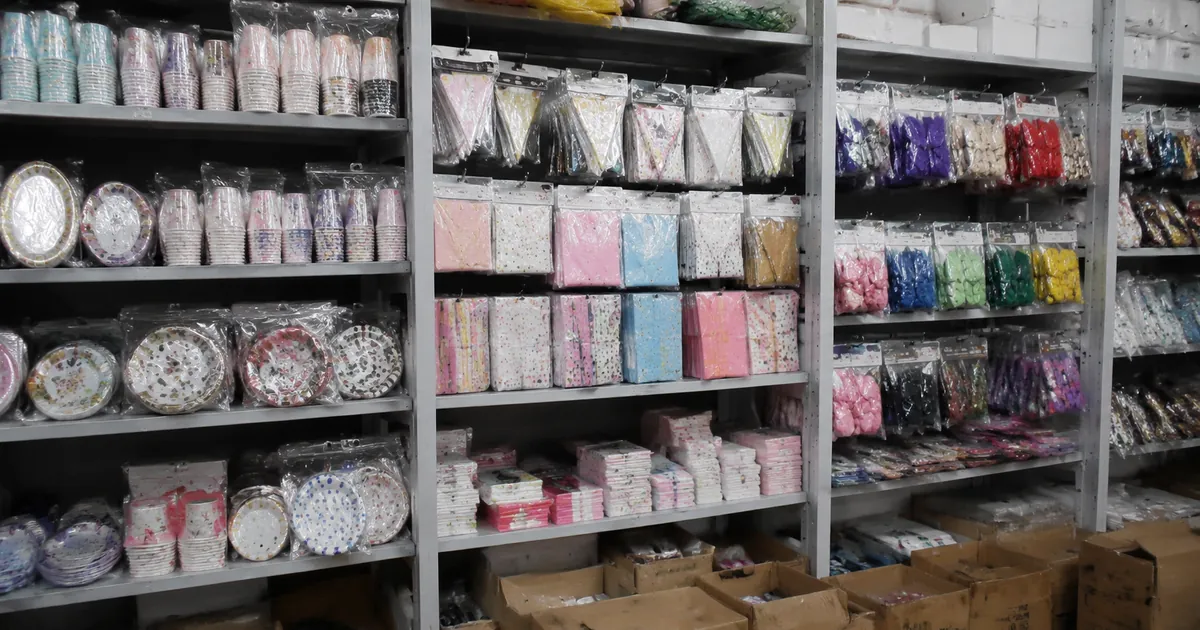
Collections Sell Better Than Individual Items
A coordinated party supply collection — matching balloons, tableware, decorations, and gift bags in one theme — consistently outsells individual items at retail. The reason is simple: consumers want a party that looks designed, not assembled from mismatched items. For the retailer, coordinated collections mean higher basket value, better margin, and fewer SKU management headaches than stocking individual items.
For the wholesale buyer, developing a coordinated collection also consolidates sourcing: instead of managing four suppliers for four categories, you work with one factory partner who coordinates production across categories.
SKU Planning: Start with the Anchor Product
Every collection starts with one anchor product — the item that defines the theme and color palette. For party supplies, the anchor is typically the tableware (plates and napkins have the largest printable surface) or the banner (sets the visual tone). Once the anchor design is finalized, extend it outward:
- Tableware: Plates (7", 9"), cups (9oz, 12oz), napkins (beverage + luncheon). 4–6 SKUs.
- Balloons: Latex balloons in 2–3 collection colors + 1 printed foil balloon shape. 3–5 SKUs.
- Decorations: Bunting banner + hanging decorations + backdrop. 2–4 SKUs.
- Gift/Favor: Coordinated favor bags or small gift bags. 1–2 SKUs.
Total: 10–17 SKUs per collection. That's enough for a complete party look without overcomplicating inventory management.
Color Consistency: The Hardest Part
Matching colors across different materials — latex, paper, foil, fabric — is technically challenging. The same Pantone reference prints differently on coated paper, uncoated kraft, latex rubber, and foil film. This is where factory coordination matters more than price.
Practical approach: establish one material as the 'color master' (typically coated paper, which renders Pantone most accurately) and match other materials to it visually, not by Pantone code. Accept slight variation — consumers don't compare a balloon to a napkin side-by-side — but reject obvious mismatches.
Request physical color swatches of every material before approving bulk production. A photo is not sufficient for color approval.
Theme Strategy: Broad Appeal vs. Niche
The most successful party collections target broad occasions with wide appeal:
- Tier 1 (mass market): Birthday (bright colors), celebration/general party (mixed brights), baby shower (pastels).
- Tier 2 (seasonal): Christmas (red/green/gold), Halloween (orange/black/purple), graduation (school colors).
- Tier 3 (niche): Specific themes (unicorn, dinosaur, mermaid) — higher risk, higher reward if you hit a trend.
Start with one Tier 1 collection to establish the supply chain and quality standards. Add Tier 2 seasonal collections as the program matures. Tier 3 themes are for experienced buyers who can absorb the risk of a theme that doesn't sell.
Factory Coordination: One Throat to Choke
The operational advantage of a coordinated collection is working with one factory that handles production across categories. When evaluating a factory for collection production, verify:
- Which categories they produce in-house vs. coordinate through partner factories
- Their color matching process — do they use a spectrophotometer or visual matching?
- Whether they can provide physical swatches of every material before bulk production
- Their packaging capability — can they produce coordinated multi-SKU retail packs?
A factory that produces balloons in-house but coordinates tableware through a partner is still valuable — the key is transparency about what's direct vs. coordinated production.
Packaging the Collection
Coordinated collections sell best in coordinated packaging. Options:
- Collection box: All items in one branded retail box — highest perceived value, highest margin, best gift appeal.
- Category packs: Tableware set (cups + plates + napkins), decoration set (banner + hanging decor), balloon set — allows consumers to buy the full look or supplement existing items.
- Individual items with collection branding: Each item packaged separately but with consistent collection branding — most flexible for retailers who want to merchandise by category.
The collection box commands the highest retail price point but has the highest packaging cost. Category packs are the sweet spot for most wholesale programs — good perceived value, reasonable packaging cost, and flexible for retailers.