The Gift Bag Supply Chain
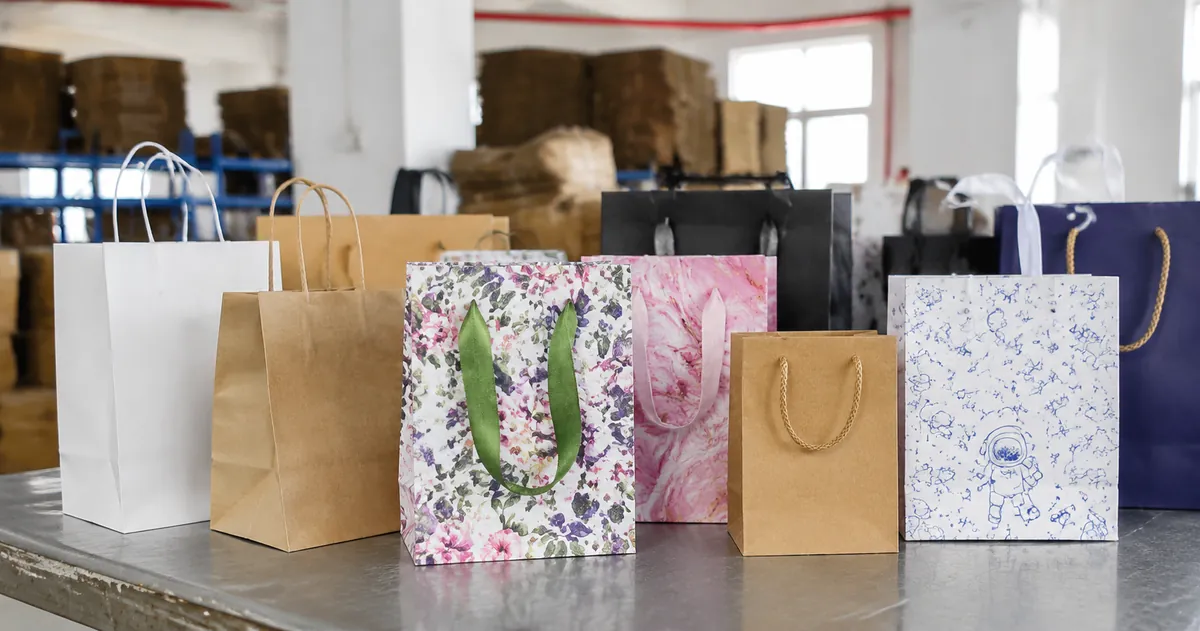
Gift bags are deceptively complex. A simple paper bag involves paper selection, handle attachment, printing, lamination, and flat-packing — each step with its own cost, MOQ, and quality implications. Chinese factories, particularly in Zhejiang and Guangdong, produce the majority of the world's printed gift bags, from basic kraft favor bags to luxury laminated euro totes.
This guide explains the options available from Chinese manufacturers and how to specify your requirements for accurate quotations.
Paper Types and When to Use Each
Kraft Paper (100–180 gsm)
Natural brown or bleached white kraft is the most common gift bag material. It is the lowest cost option, widely available, and carries a natural/recycled aesthetic that aligns with eco-conscious branding. Kraft bags typically use twisted paper or flat paper handles. Best for: everyday retail, grocery, farmer's markets, budget-conscious programs.
Coated Art Paper (157–250 gsm)
Art paper with a clay coating provides a smooth, bright white surface for high-quality printing. Matte or gloss lamination adds durability and a premium feel. Best for: fashion retail, cosmetics, jewelry, premium gifting, and any brand where the bag is part of the unboxing experience.
Specialty Papers
Textured, metallic, pearlescent, and specialty kraft papers are available but typically require longer lead times and higher MOQs. These are used for luxury and limited-edition programs where the bag itself is a brand statement.
Handle Types: Cost, Look, and Durability
- Twisted Paper Handles: Most common, lowest cost. Two twisted paper cords inserted through reinforced holes. Good for bags up to 5 kg load.
- Flat Paper Handles: Flat, wider paper ribbons — more comfortable to hold, better for heavier loads. Slightly more expensive than twisted.
- Cotton Rope Handles: Premium look, soft grip, good for euro tote styles. Higher cost, adds roughly $0.05–0.10 per bag.
- Ribbon Handles: Grosgrain or satin ribbon — luxury retail. Highest handle cost but distinctive brand statement.
- Die-Cut Handles: Integrated handle cut directly into the bag panel — no separate handle piece. Clean modern look, low cost, but limited load capacity.
Printing Methods for Gift Bags
Flexographic Printing: Standard for kraft and uncoated papers. 1–6 colors, cost-effective for repeat patterns and simple logos. Best for high-volume runs.
Offset Printing: Full-color CMYK with sharp detail. Best for coated art paper and photo-quality designs. Higher setup cost but better print quality.
Hot Stamping: Metallic foil (gold, silver, holographic) pressed onto the paper surface. Used for logos and accent elements. Adds roughly $0.03–0.08/bag.
Spot UV: Glossy coating applied to specific areas for contrast with matte background. Premium effect, typically on coated art paper.
MOQ and Pricing Benchmarks
Indicative MOQs from Chinese gift bag factories:
- Custom printed kraft bags: From 5,000 pieces per design
- Coated art paper bags with lamination: From 3,000–5,000 pieces
- Die-cut handle bags: From 5,000–10,000 pieces
- Euro tote with rope handles: From 2,000–5,000 pieces
Unit cost for a standard medium (8×10 inch) kraft paper bag with 1-color print and twisted handles ranges from $0.08–0.18 FOB depending on quantity and paper weight. Coated art paper with full-color print and lamination roughly doubles that.
Sizing Standards
Gift bag sizing uses width × height × gusset (depth) in inches or centimeters. Common retail sizes:
- Small: 5×7×3 inch — favor bags, jewelry, small items
- Medium: 8×10×4 inch — standard retail bag
- Large: 10×13×5 inch — clothing, multiple items
- Jumbo: 16×19×6 inch — oversized gifts, hampers
Custom sizes are available but require new cutting dies, which adds roughly $50–150 tooling cost and 7–10 days to sample lead time.
Packaging and Shipping
Gift bags are flat-packed for shipping efficiency. A standard 20-foot container holds roughly 150,000–250,000 flat-packed bags depending on size and paper weight. Flat-packing also means the buyer or retailer needs to open and shape bags before use — factor this labor into your retail plan.
Retail-ready packaging options include pre-counted shrink-wrapped bundles, hang-tag ready pre-punched holes, and branded shelf-ready display boxes.