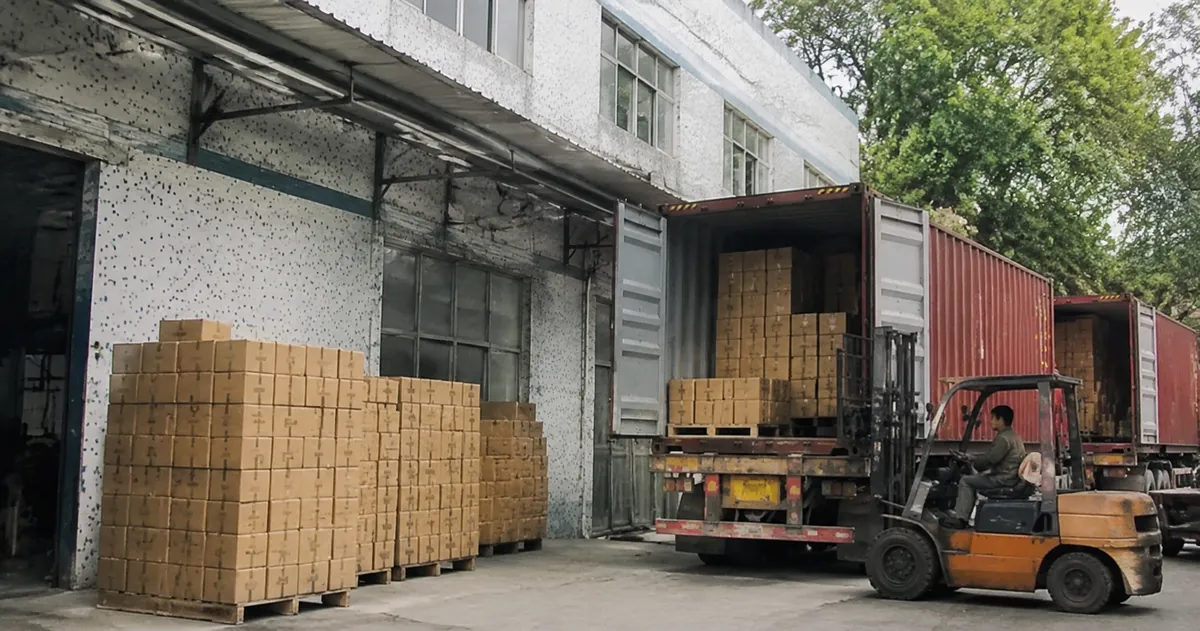
Freight Can Be 15–25% of Landed Cost — Optimize It
Most first-time importers focus on FOB price and ignore freight optimization. But for lightweight, bulky products like party supplies, freight can be 15–25% of total landed cost. Optimizing packaging and carton configuration can reduce freight cost by 10–30% — often more than negotiating another 2–3% off FOB price.
Carton Optimization: The Biggest Lever
Party supplies are typically lightweight but bulky. Balloons, paper decorations, and gift bags take up more volume than their weight suggests. Freight is charged by the higher of actual weight or volumetric weight (= length × width × height / 6000 for air, or per cubic meter for sea).
Carton optimization checklist for your factory PO:
- Standardize carton dimensions: Use 2–3 standard carton sizes across your entire order. Mixed carton sizes waste container space. Standard sizes stack efficiently.
- Right-size cartons: Don't ship air. If a carton is 30% empty space, you're paying freight on air. Specify carton dimensions that match the packed product volume.
- Maximize carton weight (within limits): For sea freight, heavier cartons (up to ~20–25 kg) are more cost-efficient than many lightweight cartons. For air freight, stay under carrier weight limits.
- Flat-pack where possible: Gift bags, bunting, and backdrops flat-pack efficiently. Balloons compress. Paper cups and plates nest. Specify flat-packing in your PO.
LCL vs. FCL Decision
LCL (Less than Container Load): you pay per cubic meter. FCL (Full Container Load): you pay for the whole container. The crossover point is typically around 12–15 cubic meters for a 20ft container.
Party supply cargo volume examples: a 20ft container holds roughly 800–1,200 cartons of packaged balloons (28–30 CBM). The same container holds roughly 150,000–250,000 flat-packed gift bags. If your order is above 12–15 CBM, FCL is usually more cost-effective.
If your order is below the FCL threshold: consolidate with other products in your program. Adding tableware or decorations to a balloon order can push volume past the LCL/FCL crossover, reducing per-unit freight cost.
Packaging Weight Reduction
Every gram of packaging weight adds to freight cost. Simple reductions:
- Use thinner polybags (30 micron instead of 50) where product protection allows.
- Use paper bands instead of cardboard header cards where brand doesn't require the card.
- Eliminate unnecessary inserts and filler material.
- Use single-wall cartons instead of double-wall for lightweight products (balloons, napkins).
A 10% reduction in overall shipment weight can reduce freight cost by roughly 5–8%. Over multiple shipments, this adds up significantly.
Incoterm Strategy
FOB (Free On Board): you control the freight forwarder. This is the right choice for most importers because you can compare freight quotes and choose the best option. CIF (Cost, Insurance, Freight): the factory arranges shipping. Convenient but you don't control the carrier, schedule, or cost.
For party supplies, FOB with your own forwarder is recommended. Get quotes from 2–3 forwarders for each shipment. Forwarder pricing varies significantly — comparing quotes can save 10–20% on freight.