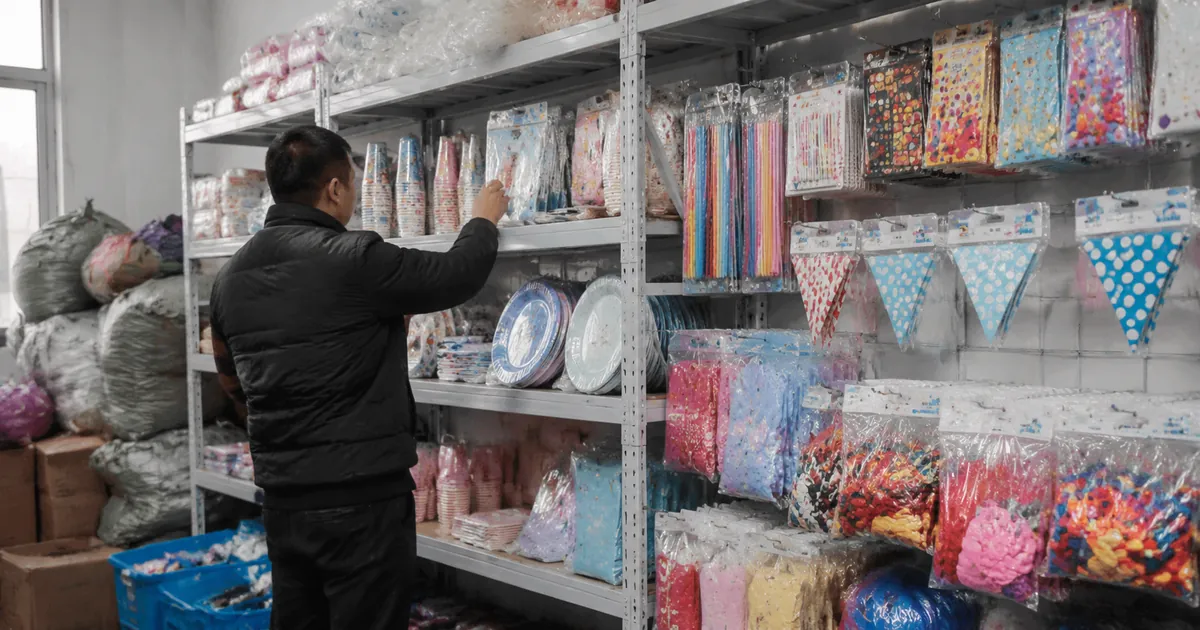
Seasonal Party Supplies Follow an Immutable Calendar
You cannot rush a Halloween order in September, or a Christmas order in November, and expect anything other than air freight at margin-destroying cost. Seasonal party supply programs operate on a fixed calendar that runs 6–8 months ahead of the retail peak. This calendar maps every season with development, ordering, production, shipping, and delivery milestones.
Halloween (Retail Peak: October)
- January–February: Review previous year sell-through data. Identify winning and losing SKUs. Begin new design development.
- March–April: Finalize designs. Order samples. Begin artwork approval process.
- May: Place bulk production orders. This is the hard deadline — orders after June risk compressed production and air freight.
- June–July: Production. In-process QC at 30% completion.
- August: Ship via sea freight. Pre-shipment inspection before loading.
- September: Goods arrive at warehouse. Distribute to retail accounts. Most retailers set Halloween displays by mid-September.
- October: Peak sales. Post-Halloween clearance begins November 1.
Christmas & Holiday (Retail Peak: November–December)
- March–April: Review previous season. Develop new designs. Christmas is the biggest seasonal program — development should start early.
- May–June: Finalize designs and place bulk orders. Factory Christmas production slots fill by July — order earlier for better scheduling.
- July–August: Production. Factories are at peak capacity. Delays are more likely — build buffer into the timeline.
- September: Ship via sea freight. Pre-shipment inspection.
- October: Goods arrive. Distribute to retail. Christmas displays go up by mid-October in most retailers.
- November–December: Peak sales. Post-Christmas clearance begins December 26.
Graduation (Retail Peak: May–June, US)
- October–November (previous year): Develop designs for the upcoming graduation season. Year-specific products ('Class of 2027') require new artwork each year.
- December–January: Place bulk orders. Graduation is a shorter season with a harder deadline — late orders miss the entire season.
- February–March: Production and shipping. Air freight contingency recommended for graduation — the season has no flexibility.
- April: Goods arrive. Distribute to retail.
- May–June: Peak sales. Post-graduation clearance begins July.
Everyday/Birthday (Year-Round)
Everyday party supplies (birthday, celebration, general party) don't have a seasonal deadline but benefit from quarterly replenishment planning: order in January for Q1 delivery, April for Q2, July for Q3, October for Q4. This smooths factory loading and reduces rush-order premiums.
Lead Time Calculator
For any seasonal program, calculate backwards from the date product must be on retail shelves:
- Retail shelf date = [your date]
- Distribution to retail: −2 weeks
- Customs clearance + domestic trucking: −1–2 weeks
- Sea freight: −3–5 weeks (US West Coast), −4–6 weeks (Europe)
- Production: −3–6 weeks (depending on product and quantity)
- Sampling and approval: −2–4 weeks
- = Order placement deadline
Example: Halloween product must be on shelf September 15. Work backwards: order by May 1. Development must start by February. Total lead time from development to shelf: ~7 months.