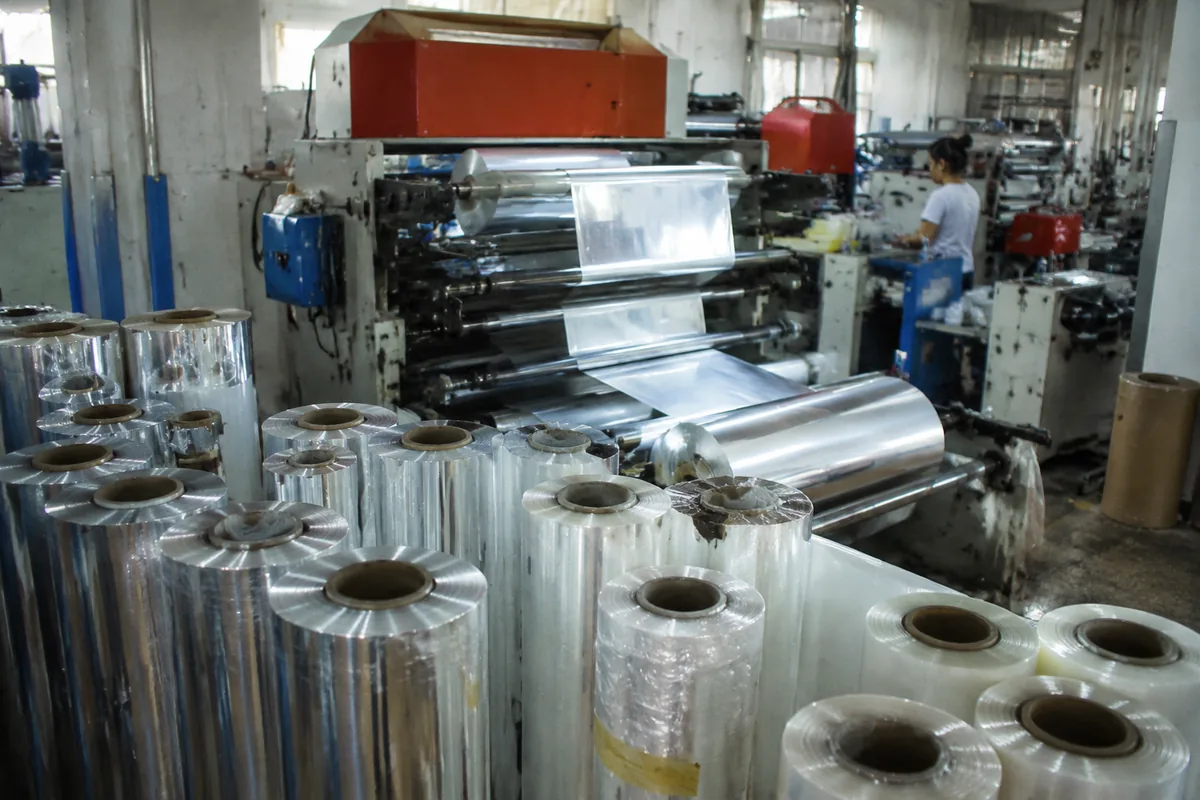
Foil balloons use biaxially oriented polypropylene (BOPP) or nylon film with a vacuum-deposited metallic layer. The film is heat-sealed into shapes, fitted with a self-sealing valve, and printed via heat transfer or pre-printed film lamination. Despite the name 'foil,' the material is plastic film, not metal foil.
Key Properties
| Composition | BOPP or nylon base film + vacuum-deposited aluminum layer (nanometers thick) |
|---|
| Thickness | Typically 20–50 microns |
|---|
| Gas barrier | Excellent — very low helium permeability; float time 3–7 days |
|---|
| Tensile strength | High for film weight; tear-resistant once sealed |
|---|
| Print surface | Printable via heat transfer or pre-printed film lamination |
|---|
| Temperature resistance | Good to approximately 80°C; not for high-heat applications |
|---|
| Environmental | Not biodegradable; limited recycling options (mixed-material film) |
|---|
| Reusability | Can be deflated (via valve straw) and re-inflated multiple times |
|---|
Grades & Variants
| Standard metallic BOPP | Most common — gold, silver, and colored metallic finishes |
|---|
| Matte metallic BOPP | Less reflective, more subtle metallic look — premium retail |
|---|
| Holographic BOPP | Light-diffracting pattern — eye-catching, premium, trend-driven |
|---|
| Clear/transparent BOPP | Non-metallized for see-through balloons — niche applications |
|---|
Compatible Processes
- Heat transfer printing
- Pre-printed film lamination
- Die-cutting (standard and custom shapes)
- Heat sealing
- Self-sealing valve insertion