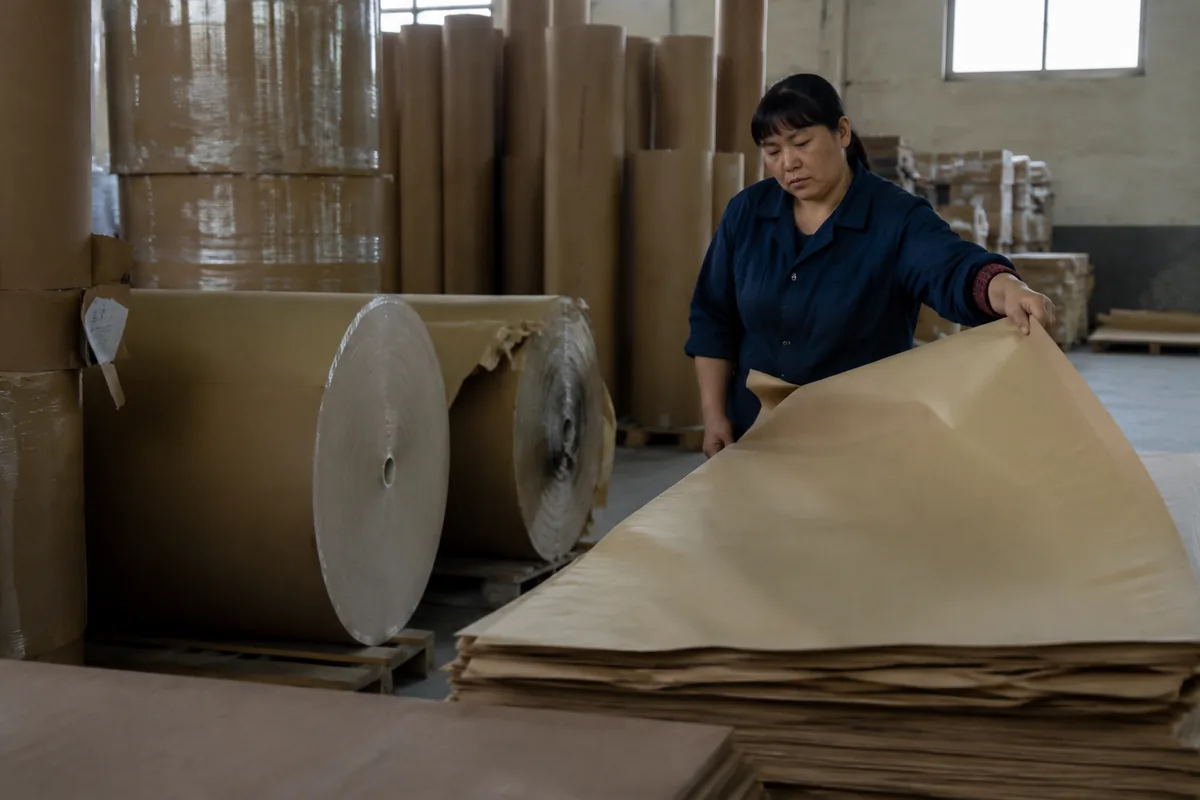
Kraft paper is produced from wood pulp through the kraft (sulfate) process, which produces stronger paper than other pulping methods. It is the standard material for gift bags, favor bags, and economy party decorations. Available in natural brown (unbleached) and white (bleached) variants.
Key Properties
| Composition | Wood pulp (softwood for strength, hardwood for smoothness) |
|---|
| Weight range | 100–180 gsm for gift bags; 60–100 gsm for favor bags |
|---|
| Tensile strength | Higher than standard paper due to sulfate pulping process |
|---|
| Tear resistance | Good — suitable for handled bags carrying up to 5 kg |
|---|
| Printability | Good for flexographic; limited for offset (surface texture) |
|---|
| Recyclability | Fully recyclable in standard paper streams when uncoated |
|---|
| FSC availability | FSC-certified kraft available from certified mills (5–15% cost premium) |
|---|
| Moisture sensitivity | Absorbs moisture — not suitable for wet products without coating |
|---|
Grades & Variants
| Natural kraft (100–120 gsm) | Standard gift bags, favor bags — most common, lowest cost |
|---|
| White kraft (100–150 gsm) | Brighter appearance, better for colorful printing — retail and premium |
|---|
| Heavy kraft (150–180 gsm) | Large and jumbo bags, heavy-duty applications — higher load capacity |
|---|
| Recycled-content kraft | Post-consumer recycled fiber content — verify certification |
|---|
Compatible Processes
- Flexographic printing (1–4 colors)
- Screen printing (simple designs)
- Die-cutting
- Handle attachment (twisted, flat, die-cut)
- FSC chain-of-custody