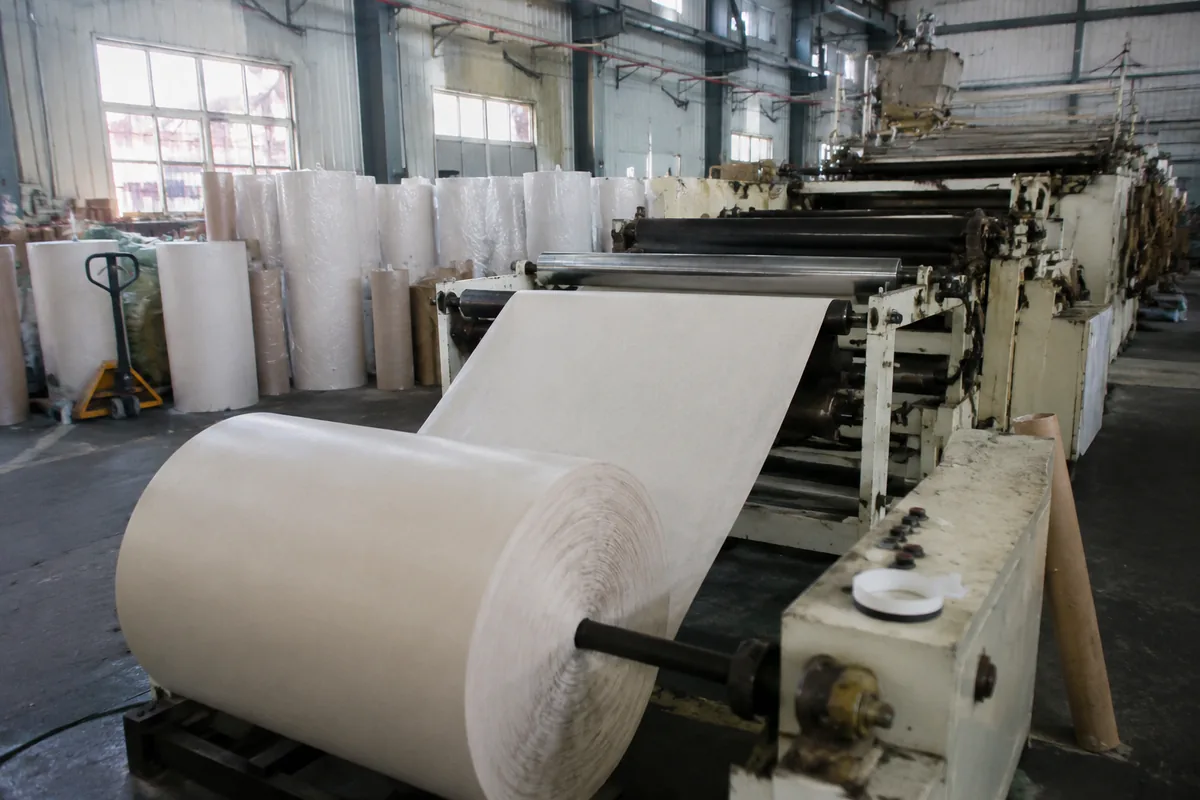
Paper cups and food-contact tableware require a moisture barrier coating. Polyethylene (PE) is the global standard — food-safe, cost-effective, and widely available. Polylactic acid (PLA) is the industrial-compostable alternative made from corn starch — higher cost, shorter shelf life, but carries a compostability claim.
Key Properties
| PE coating | Polyethylene, petroleum-based, excellent moisture barrier, FDA-approved for food contact, technically recyclable, not compostable |
|---|
| PLA coating | Polylactic acid, corn-starch-based bioplastic, good moisture barrier, industrially compostable (EN 13432), not home-compostable, not recyclable in standard streams |
|---|
| Coating weight | Typically 15–30 g/m² per side |
|---|
| Application method | Extrusion coating — molten polymer applied to paper substrate |
|---|
| Temperature resistance | PE: up to approximately 100°C (hot cups); PLA: up to approximately 60°C (cold/ warm cups only) |
|---|
| Shelf life | PE-coated: 2+ years; PLA-coated: 12–18 months (PLA degrades slowly over time) |
|---|
Comparison
| Cost | PE standard (1×); PLA 1.3–2× cost premium |
|---|
| Compostability | PE not compostable; PLA industrially compostable (EN 13432/ASTM D6400) |
|---|
| Recyclability | PE technically recyclable (rarely in practice); PLA contaminates recycling streams |
|---|
| Heat resistance | PE good for hot cups; PLA limited to warm/cold applications |
|---|
| Market preference | PE dominant globally; PLA growing in EU (Single-Use Plastics Directive) |
|---|
| Consumer perception | PE neutral; PLA positive ('plant-based'), but misunderstood (consumers may try to home-compost) |
|---|
Compatible Processes
- Extrusion coating on paper
- Flexo/offset printing on coated substrate
- Cup forming & rim curling
- Food contact compliance (FDA, EU 1935/2004, LFGB)